Lake Nyerere, Tanzania Exploratory: 16 – 25 July 2026
Into Nyerere
 After months of planning, preparation and holding thumbs, Gerhard, Tim, Paul and I finally touched down in Dar es Salaam. Lake Nyerere was still a long way away, but the first leg was complete and we were in Tanzania. Thankfully, so were all eight of our oversized bags, carrying everything from fishing tackle and camping gear to several precious kilograms of biltong and other snacks.
We made our way through the surprisingly modern Julius Nyerere International Airport, loaded ourselves into a spacious Toyota Alphard and headed into Dar. Ten minutes later we were at the Blue Saffire Hotel, our home for the night. The hotel was simple, but importantly it had a restaurant attached and cold beers were visibly being served. The plan was straightforward: drop the bags, find something substantial to eat and enjoy a few beers. The following seven nights would be dry, alcohol not being permitted in the temporary camp—a fairly sensible rule considering we were about to spend a week sleeping under canvas in some of Africa’s wildest Big Five country.
The alarm went off at 4:30 the following morning and before long we were on our way to Dar’s Standard Gauge Railway terminal. Our next leg was a 90-minute high-speed train journey to Morogoro and, despite some early confusion around the considerable excess weight of our luggage, it was remarkably pleasant. The train was modern, spacious and comfortable and, best of all at that hour, served coffee.
At Morogoro we met the logistics team and our driver, along with the Toyota Land Cruiser Prado that was somehow supposed to carry six people and our mountain of equipment for the next nine hours. After half an hour of pushing, squeezing and increasingly optimistic rearranging, sanity prevailed. We drove to a nearby informal shopping centre, removed the two foldaway rear seats and a substantial boom box from the Prado, repacked everything and finally set off.
Five hours later—after an impressive amount of hooting and several encounters with seemingly suicidal tuk-tuks—we reached the boundary of Julius Nyerere National Park. The change was immediate. Sugarcane fields ended abruptly and were replaced by enormous trees and thick woodland. After checking in with a friendly ranger, who assured us we were in for a treat fishing-wise, we stretched our legs and began the final four-hour drive into the park.
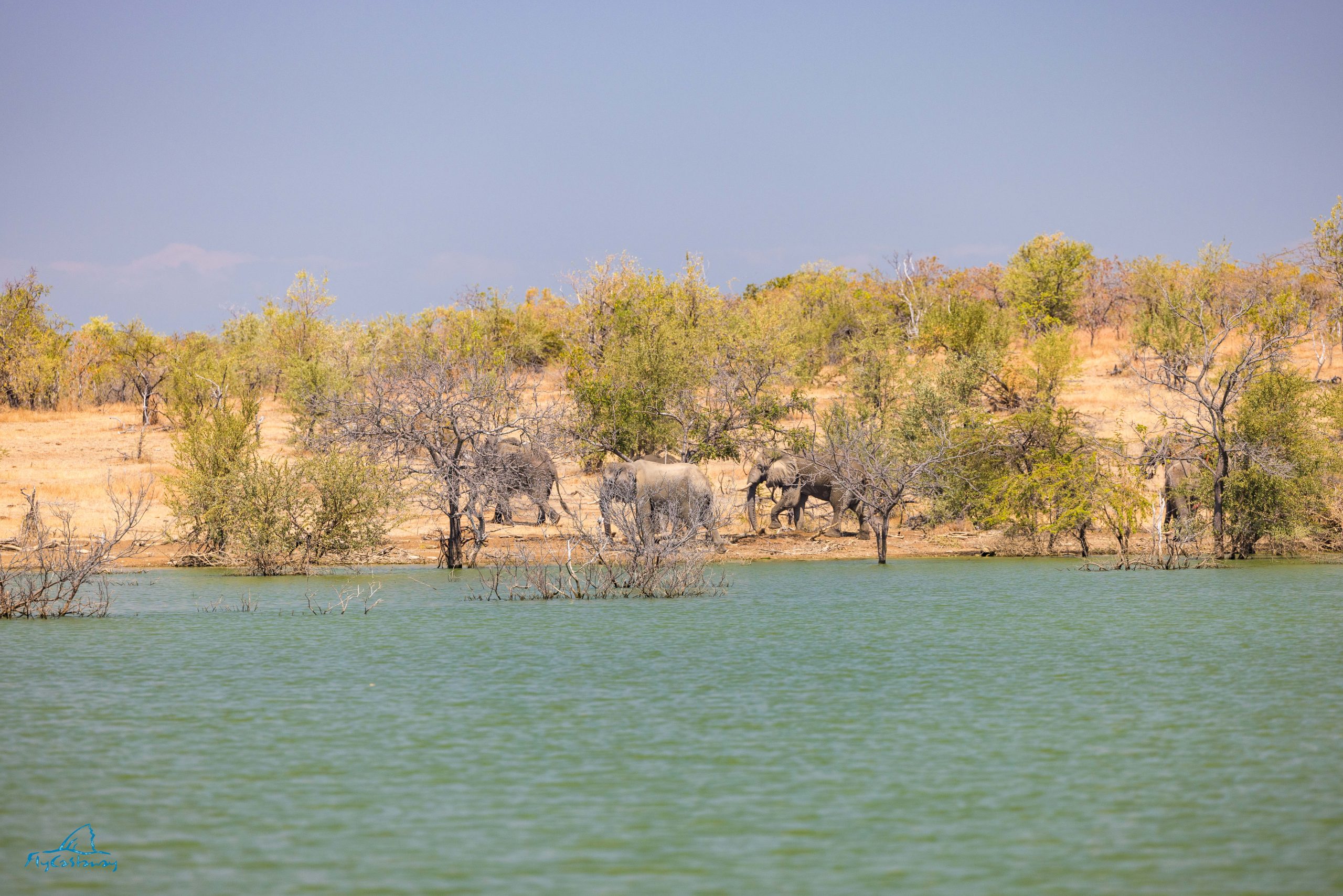
The deeper we travelled, the more imposing the landscape became. Dense miombo woodland pressed in on either side of the road and, although we saw surprisingly little game, its presence was everywhere: elephant & buffalo dung, tracks, trees pushed over beside the road. At some point we began talking about Frederick Courteney Selous and the other early explorers who had travelled through this country long before roads and Land Cruisers existed. Looking into that seemingly impenetrable woodland, it was difficult to decide whether they had been extraordinarily committed or completely mad.
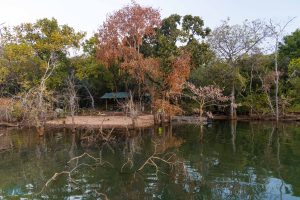
Late that afternoon our driver slowed and began searching for a rough track that had only recently been cut through the bush by the camp builders. Eventually he found it and we turned off the main road, slowly bumping our way downhill for another eight kilometres. Then, through the trees, came our first glimpse of water. It was 5:30pm and we’d been travelling since before dawn, but after months of looking at this place on maps and satellite images, we were finally at Lake Nyerere.
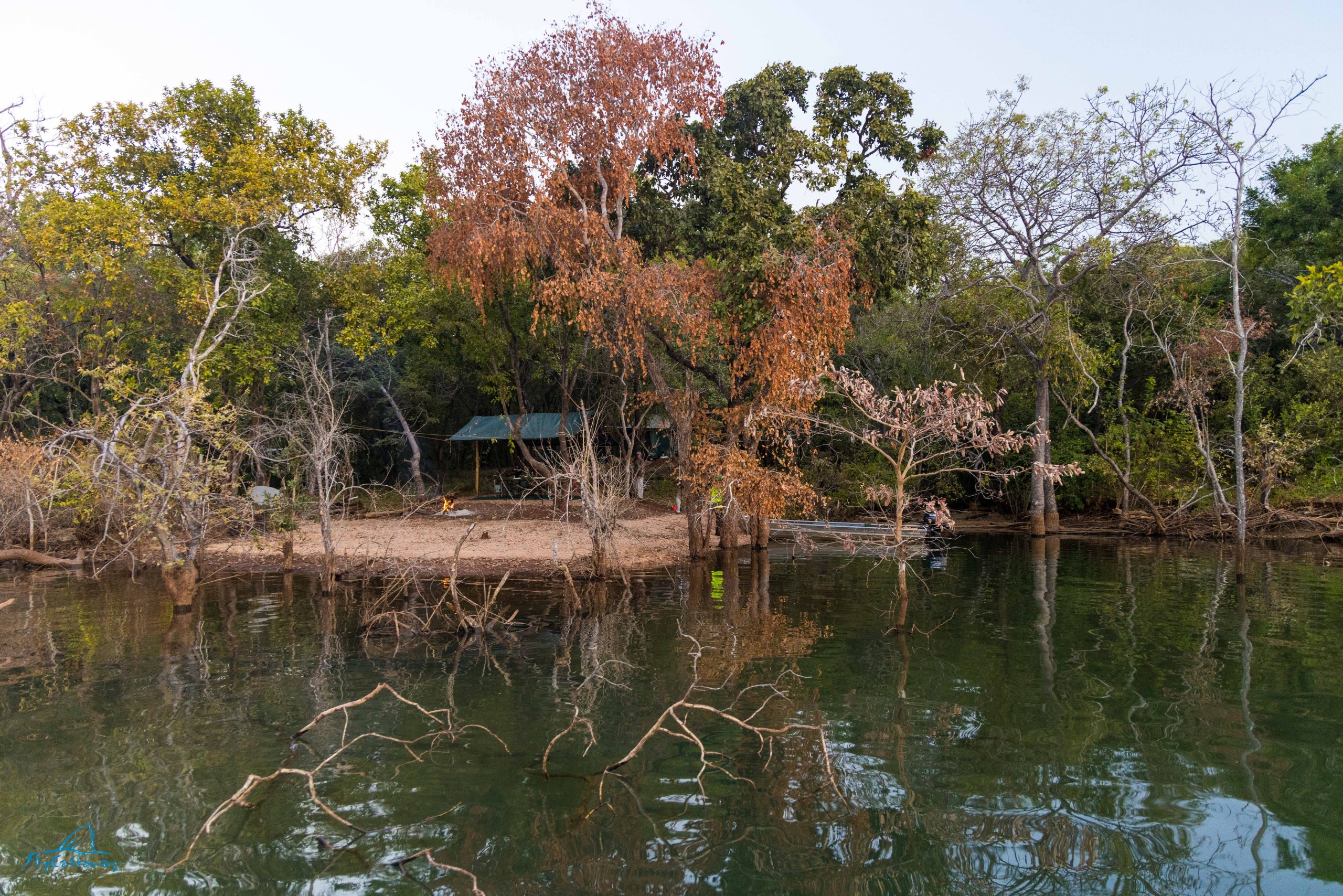
Rowland Vincent and his two right-hand men, Ali and Godi, met us as we arrived and showed us around the temporary builders’ camp. It was considerably more comfortable than I had expected: dome tents with stretchers, power and lighting, a shower and a simple dining area had all been established beneath the trees just metres from the lake. There was only one slight complication—a large male leopard had apparently been walking through camp over the previous few nights.
First Light
 At 5am the next morning I was wide awake. It was still completely dark outside and, with no sign of anyone else moving around camp, I decided there was no compelling reason to be the first person to go looking for coffee. Somewhere nearby was the leopard, while a pride of nine lions was also known to be in the area. Staying in the tent for another half-hour seemed entirely reasonable.
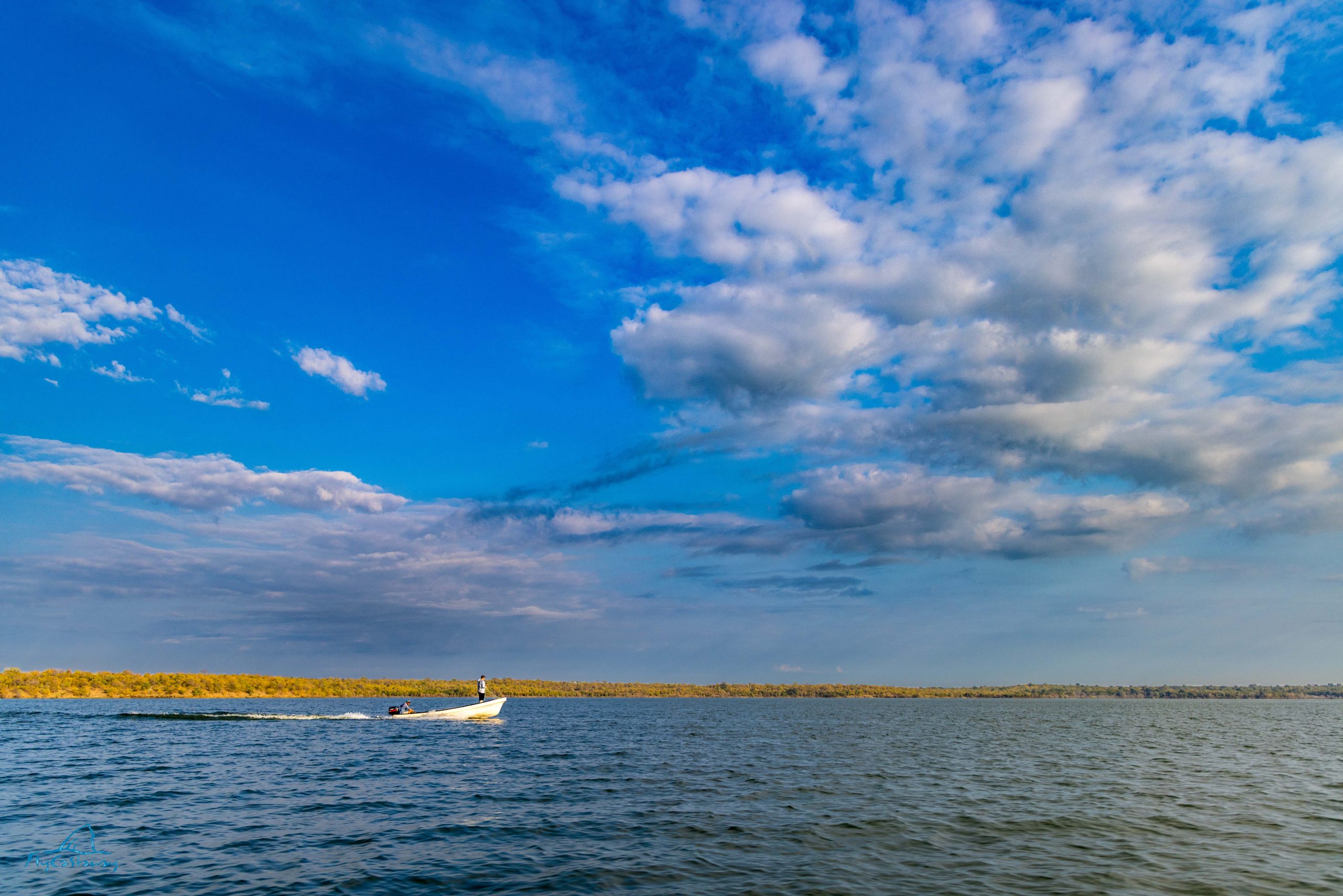
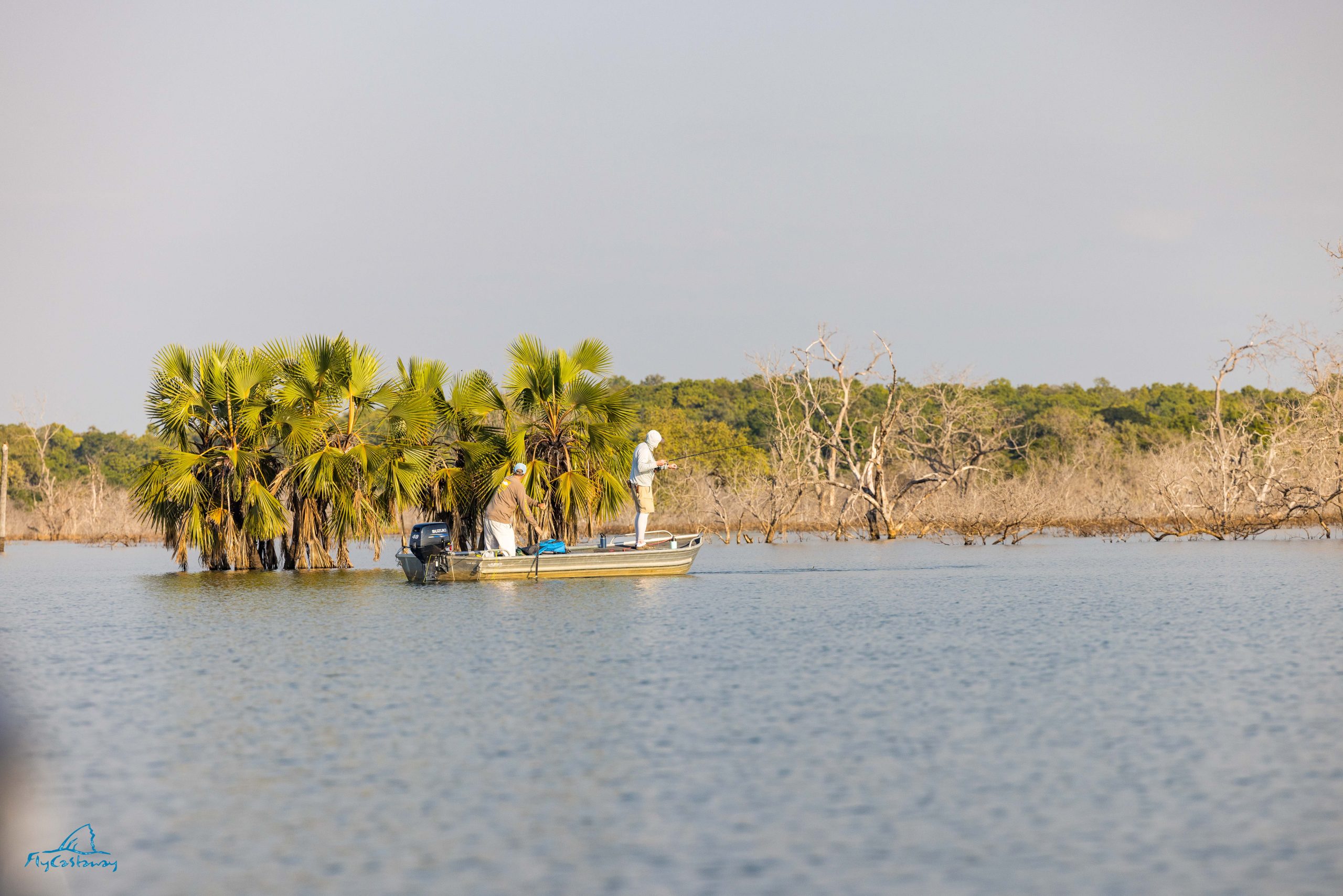
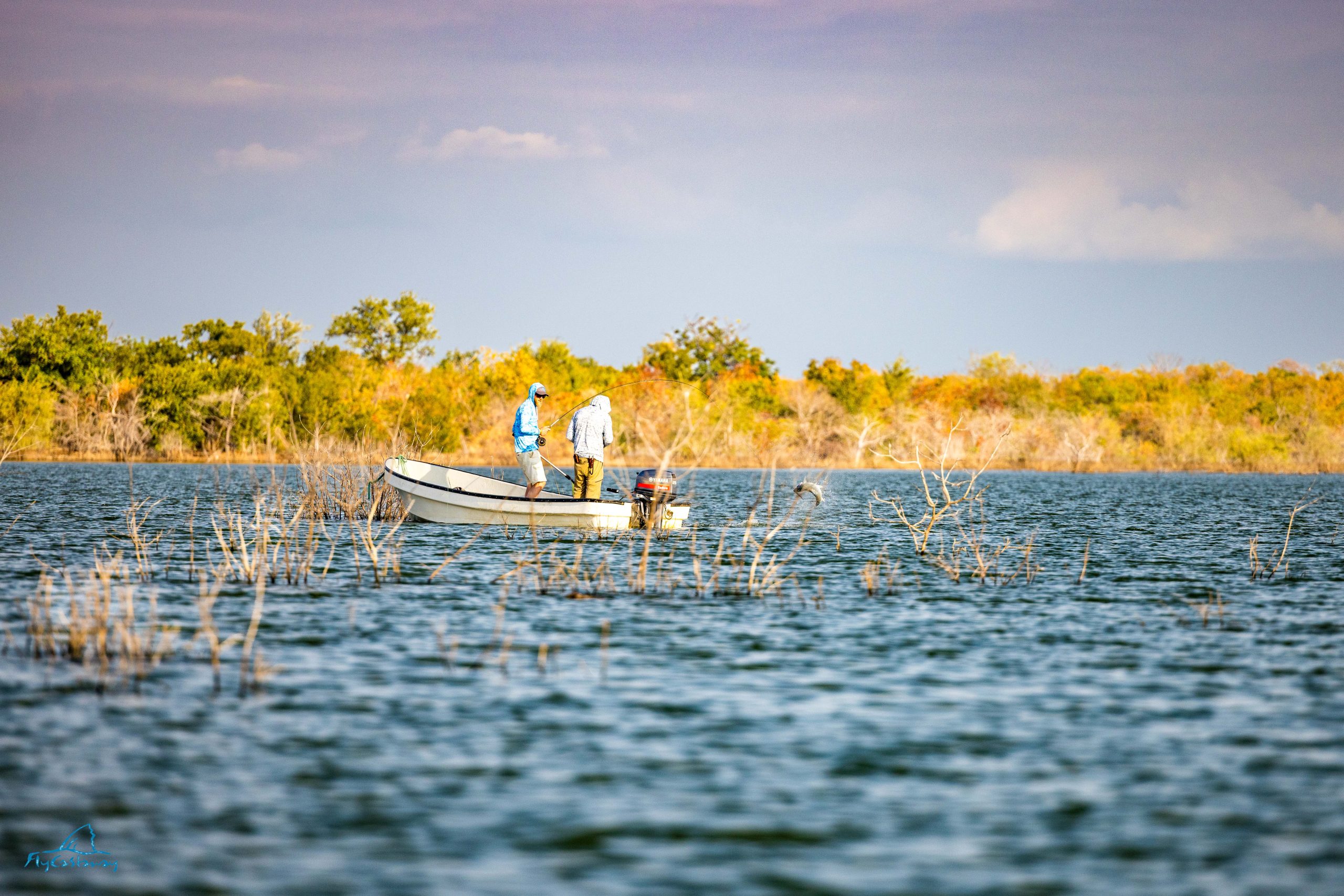
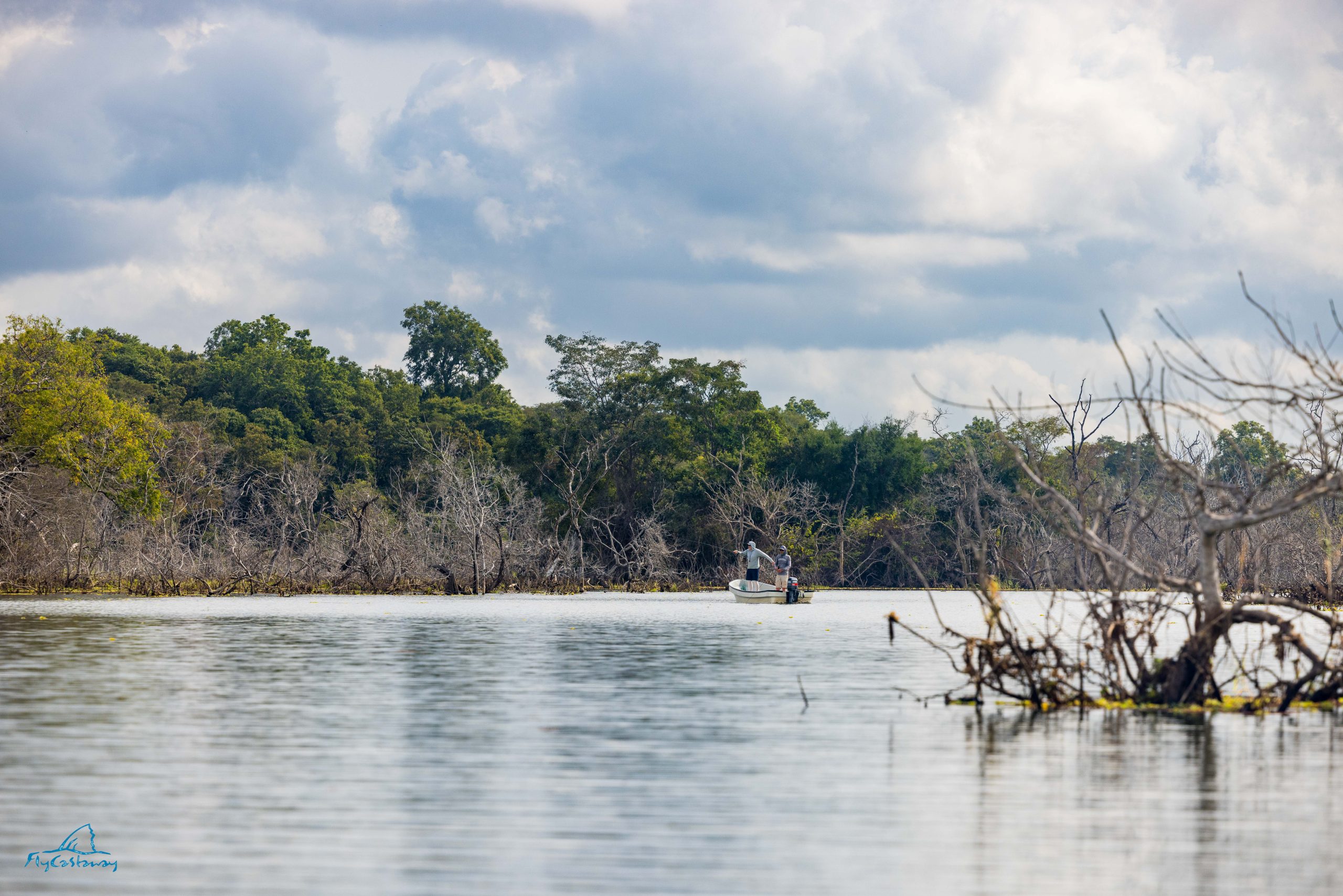
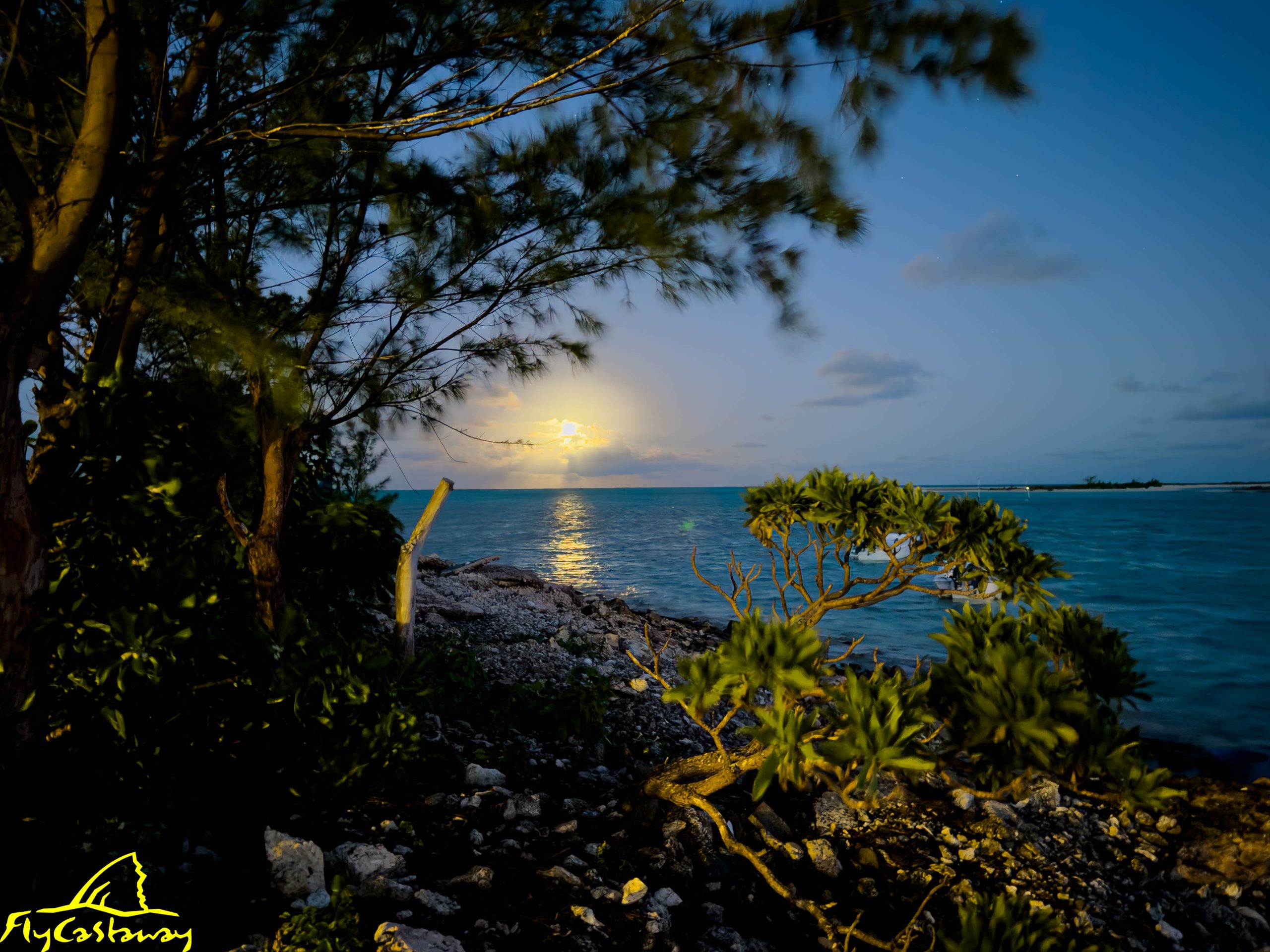
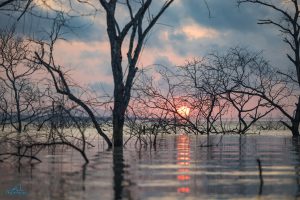
Eventually the darkness began to soften and through the trees came the gentle sound of water lapping against the shore. Our tents sat barely ten metres from the water, at the foot of what would once have been a small koppie before the valley flooded. As the light strengthened, the lake slowly revealed itself: calm water stretching away between heavily wooded banks, dead trees rising from flooded margins and the lake itself disappearing around distant points and bays. For months we had stared at this place on satellite images; now it was in front of us.
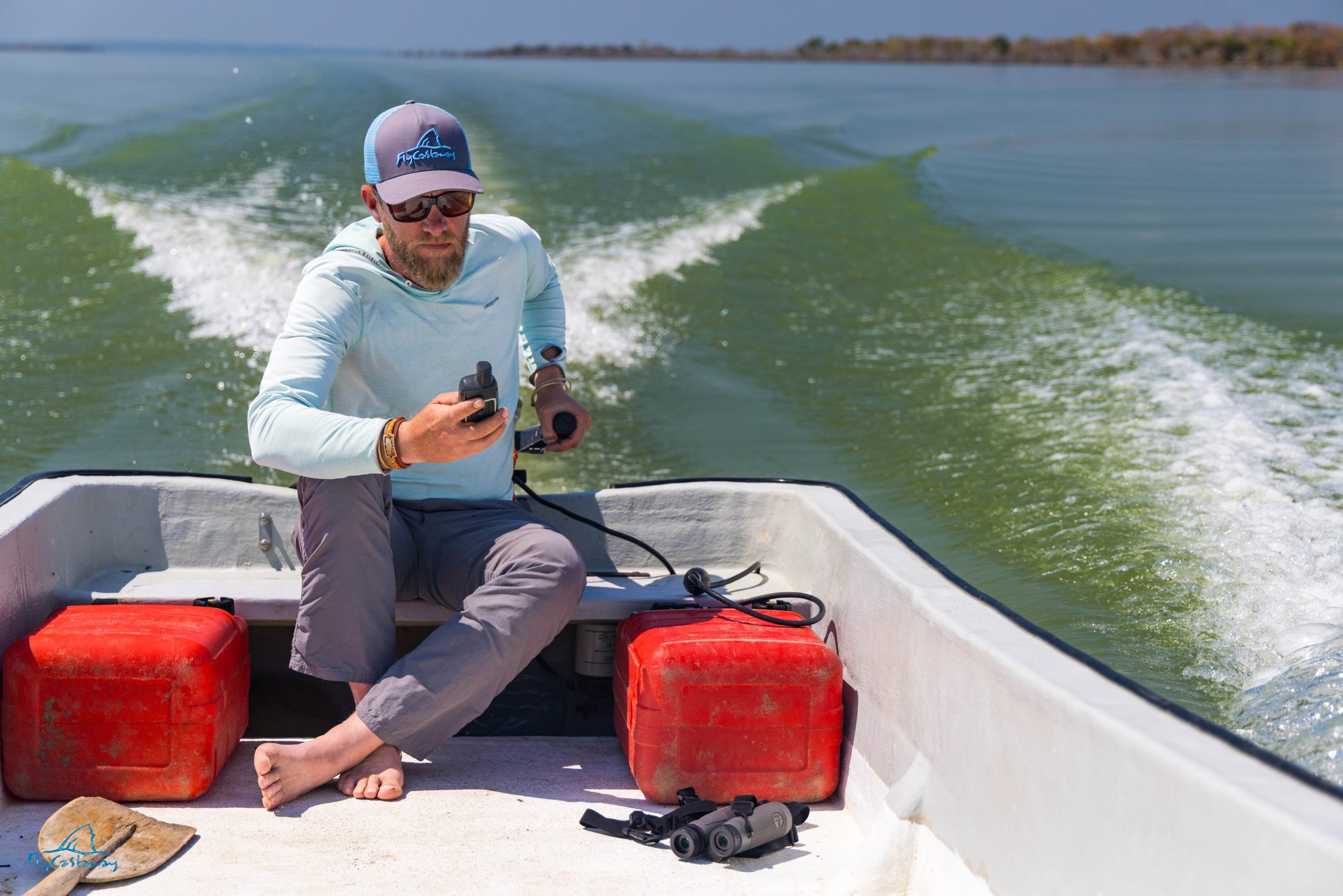
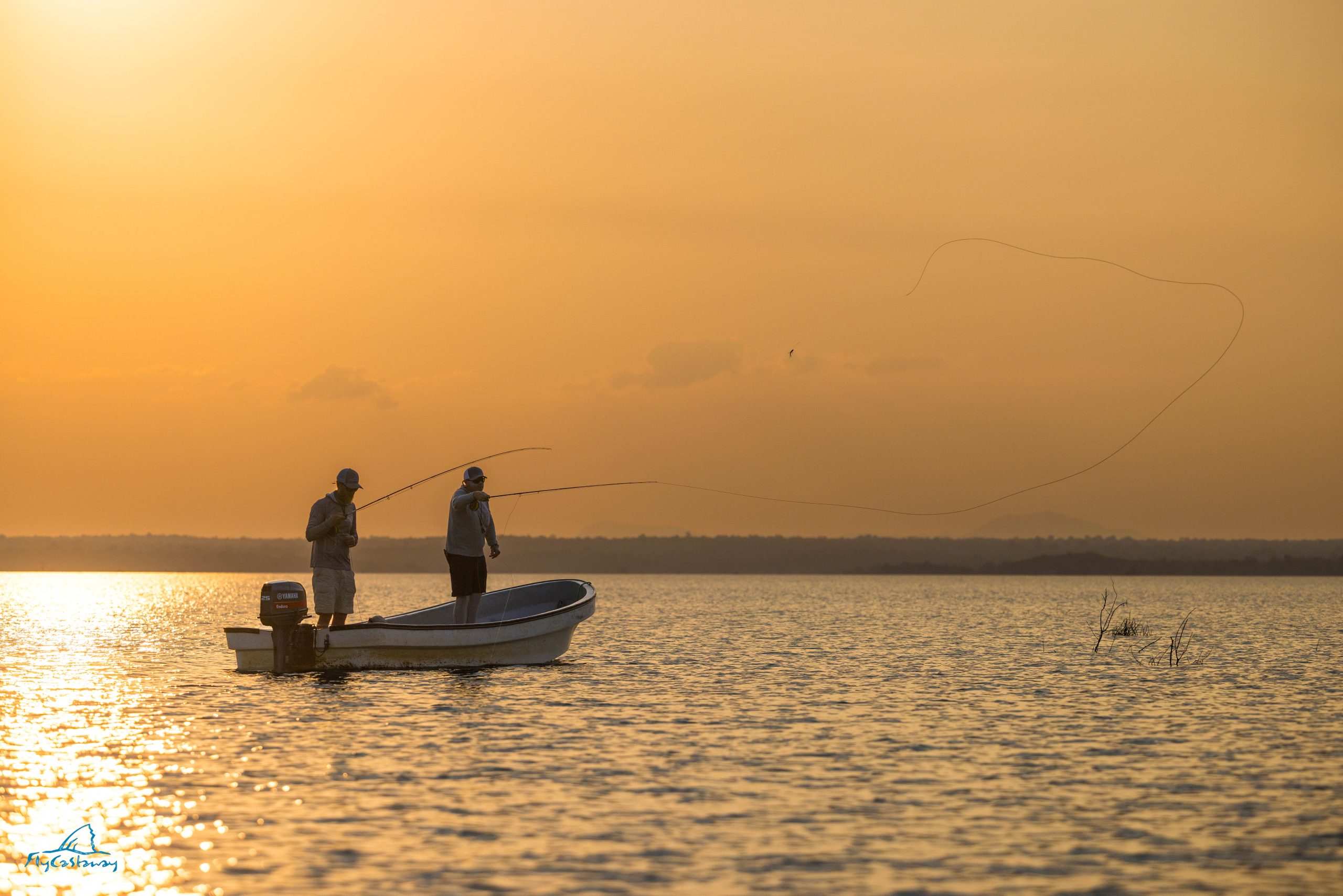
After coffee, rods were quickly rigged, boat bags packed and breakfast dispatched. Paul and I would head onto the lake immediately while G and Tim travelled by road to collect the second boat. Tim had spent countless hours studying satellite imagery before the trip, marking bays, points, channels and submerged structure that looked promising from above, but none of us really knew what we were going to find. There was only one way to find out.
For the first hour, Lake Nyerere gave us very little. We saw small fish close to shore but nothing touched our flies. Another bay looked almost impossibly good, filled with flooded timber and backed by wandering impala. A pod of hippos grunted nearby—usually an encouraging sign in tigerfish country—but again, nothing happened. We moved on, found baitfish flickering on the surface and eventually had one solid bump amongst heavy timber, but still no fish.
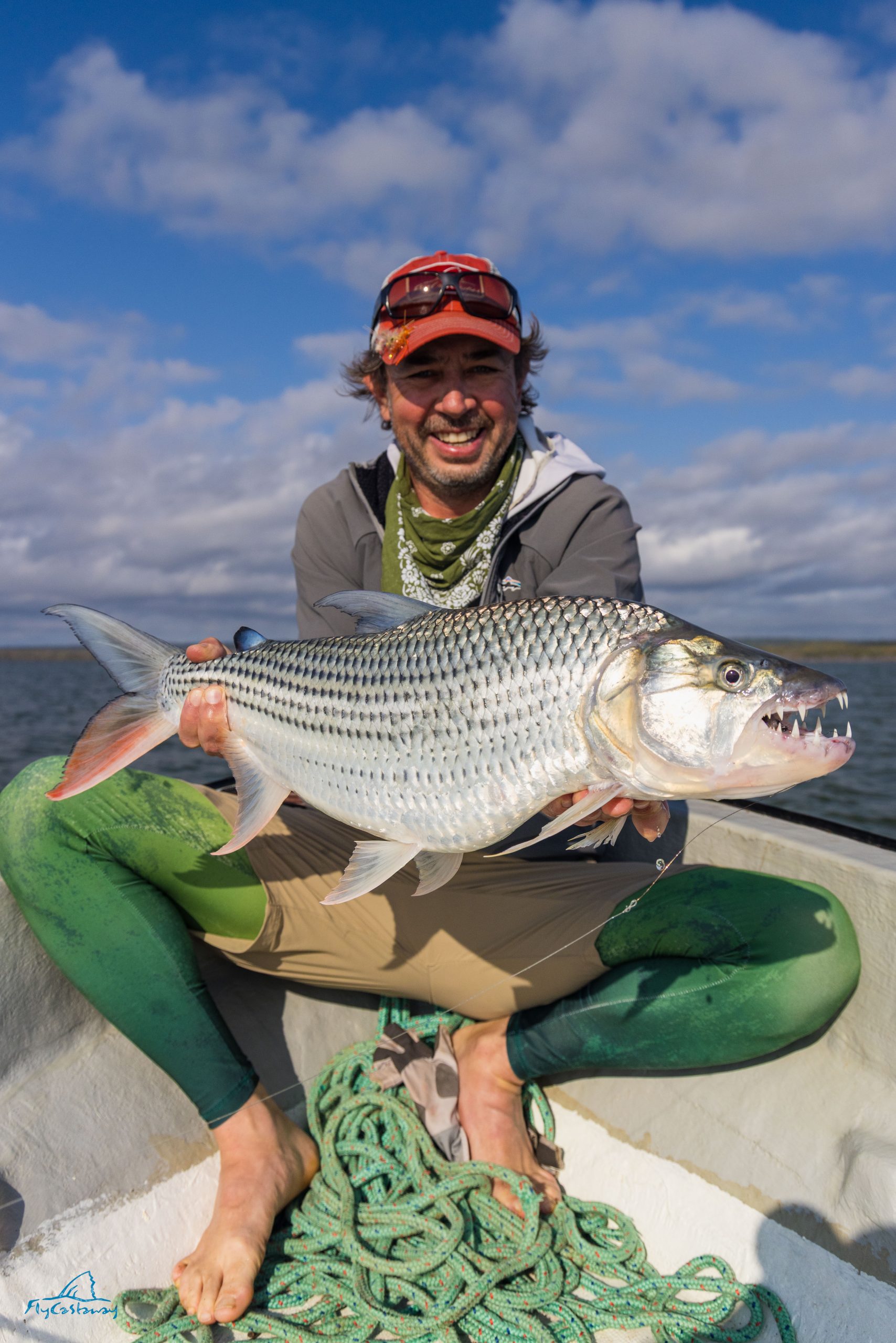
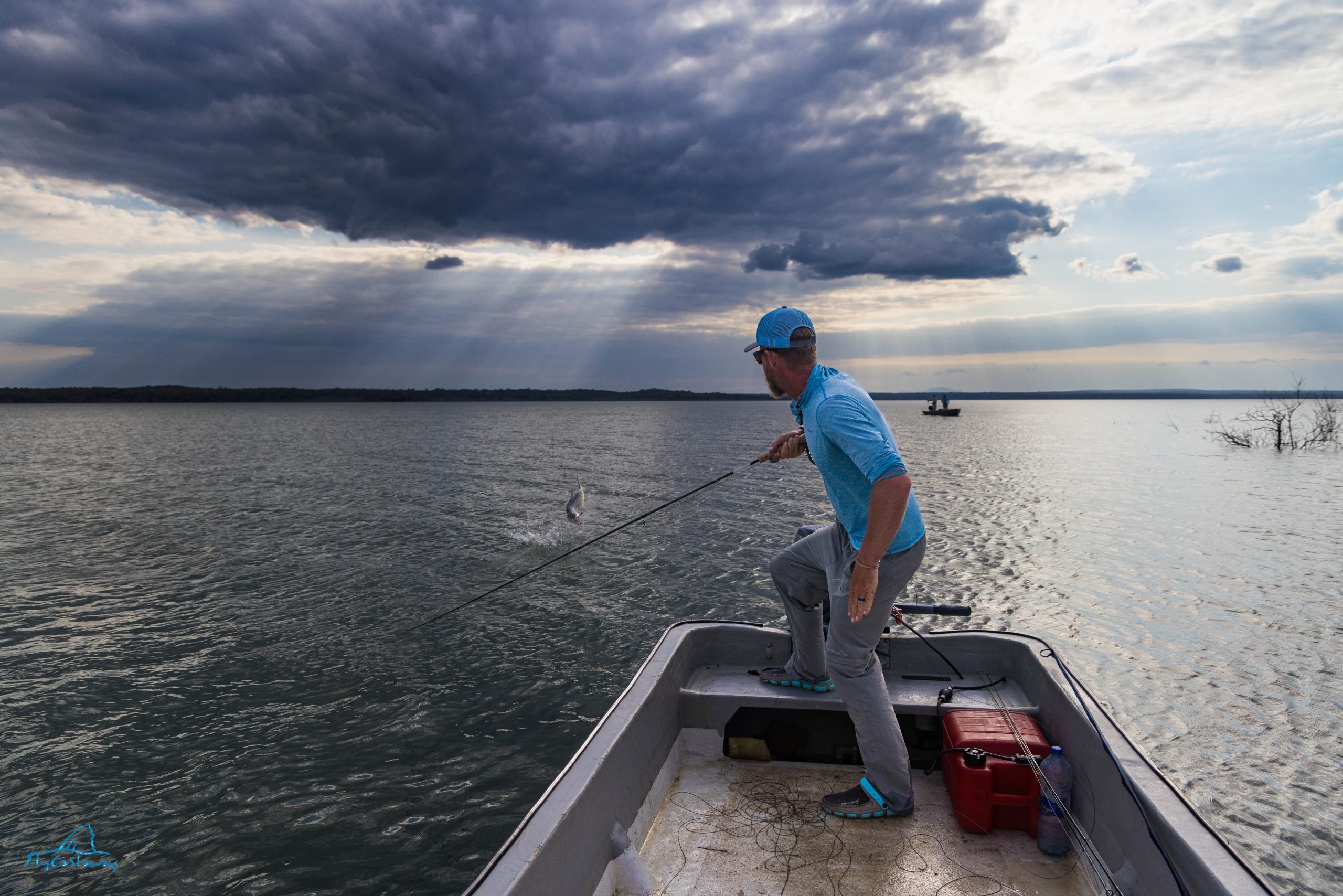
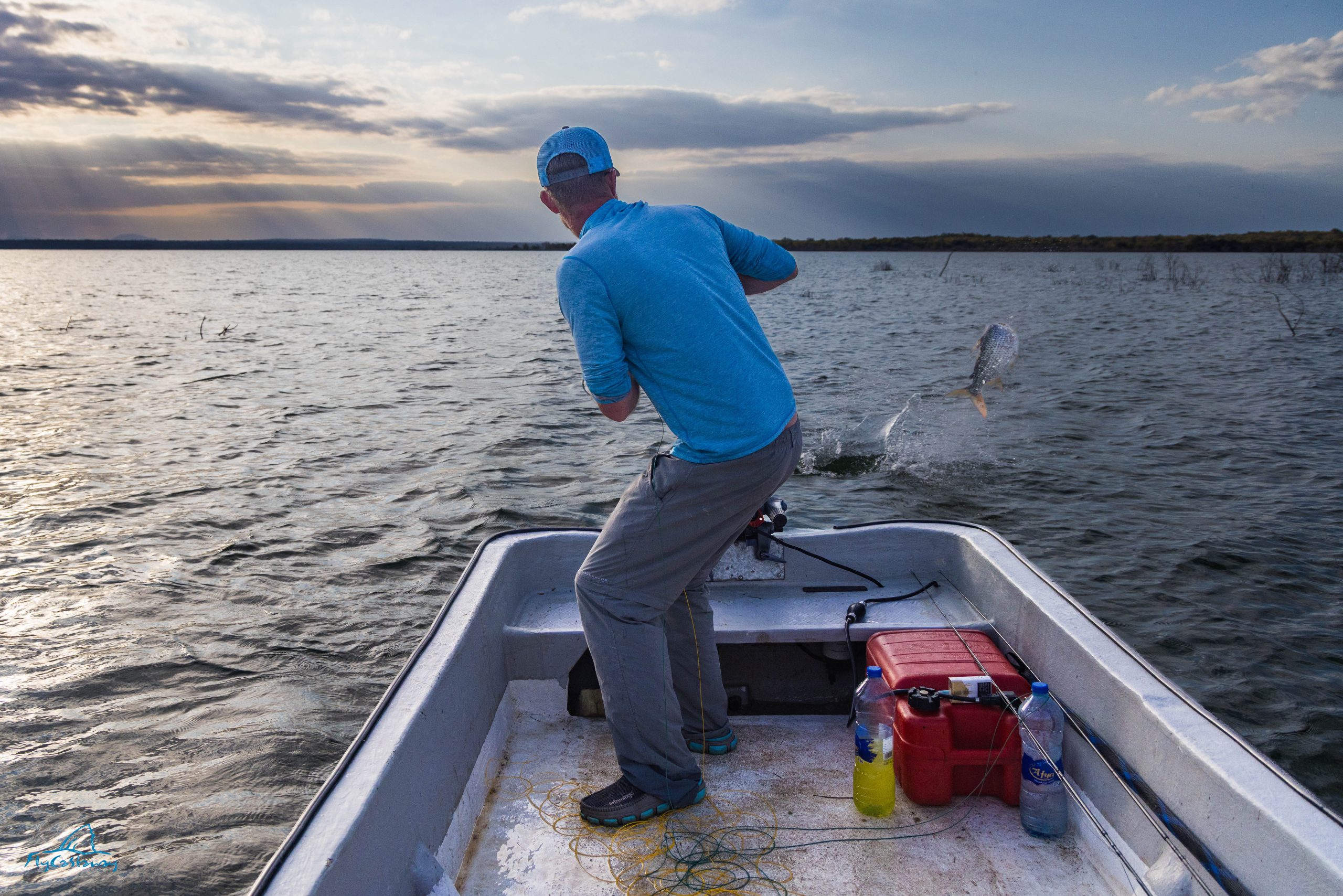
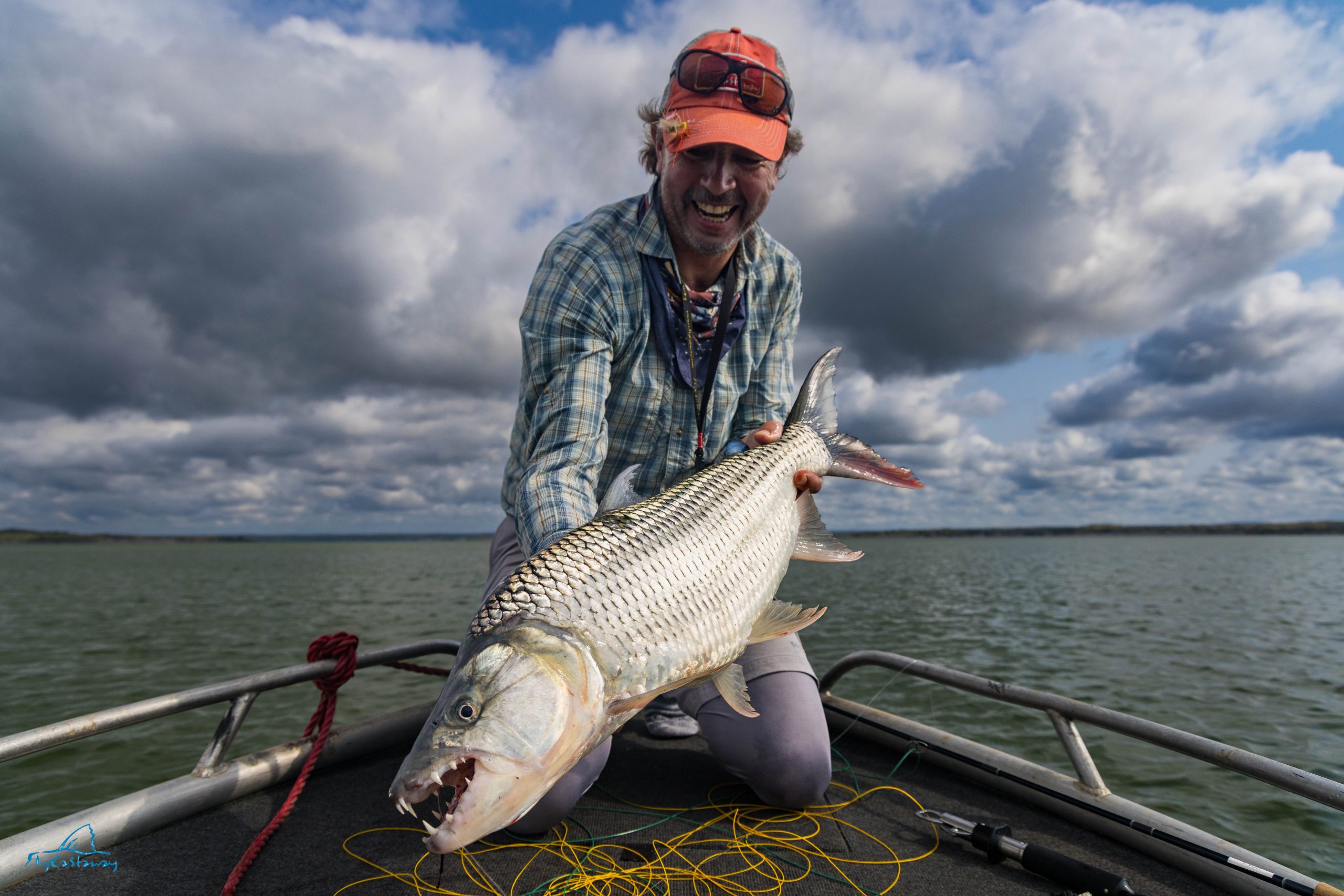
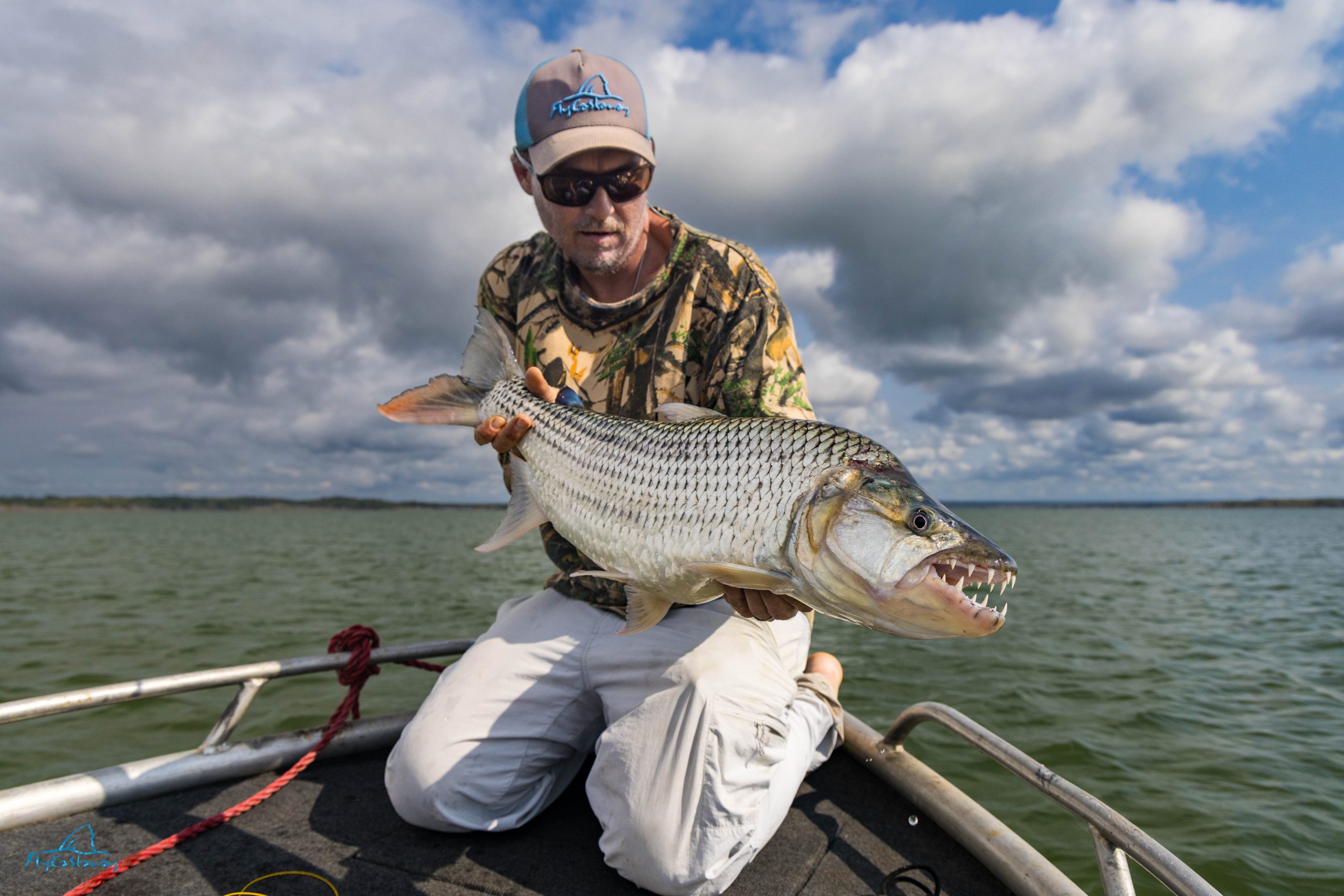
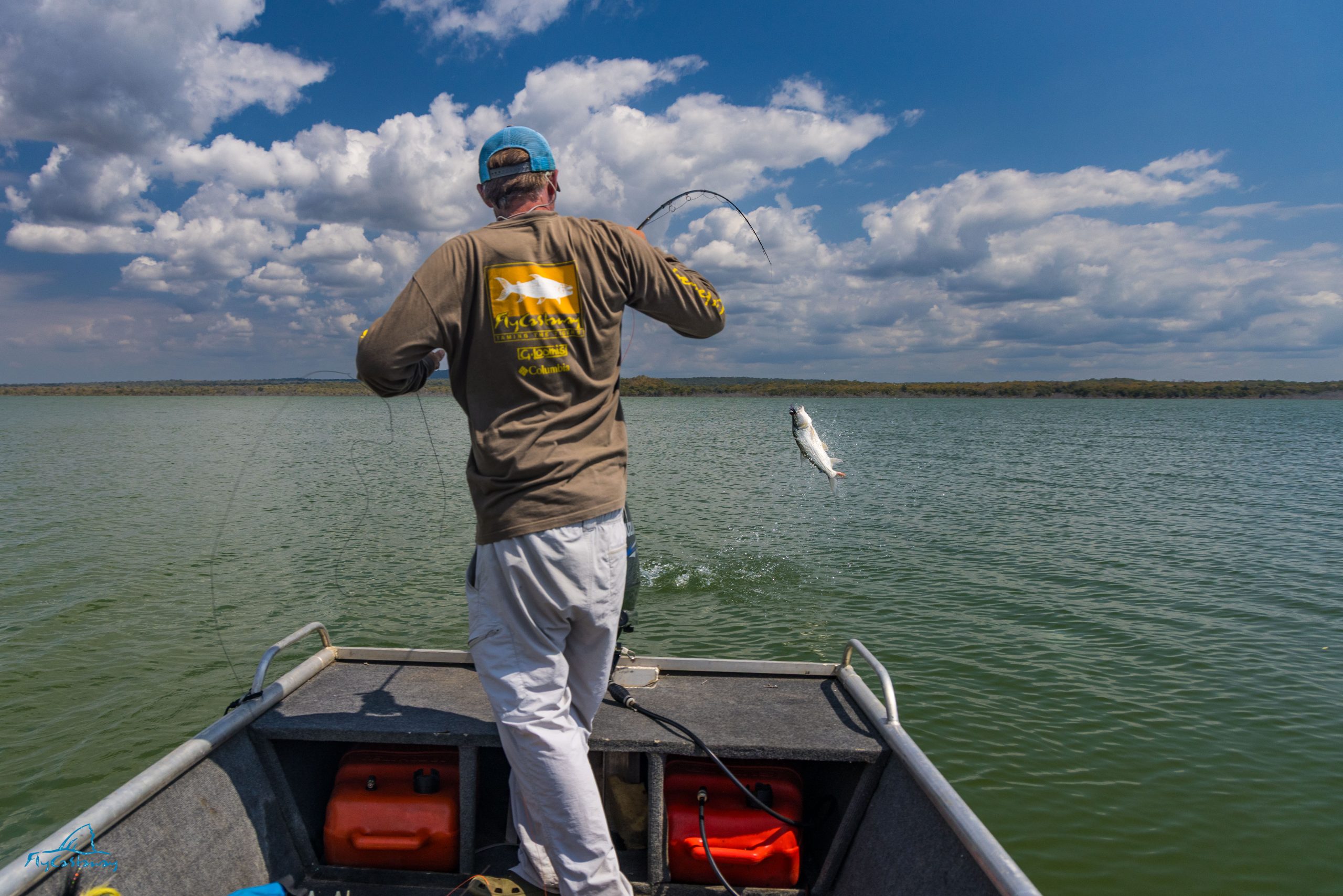
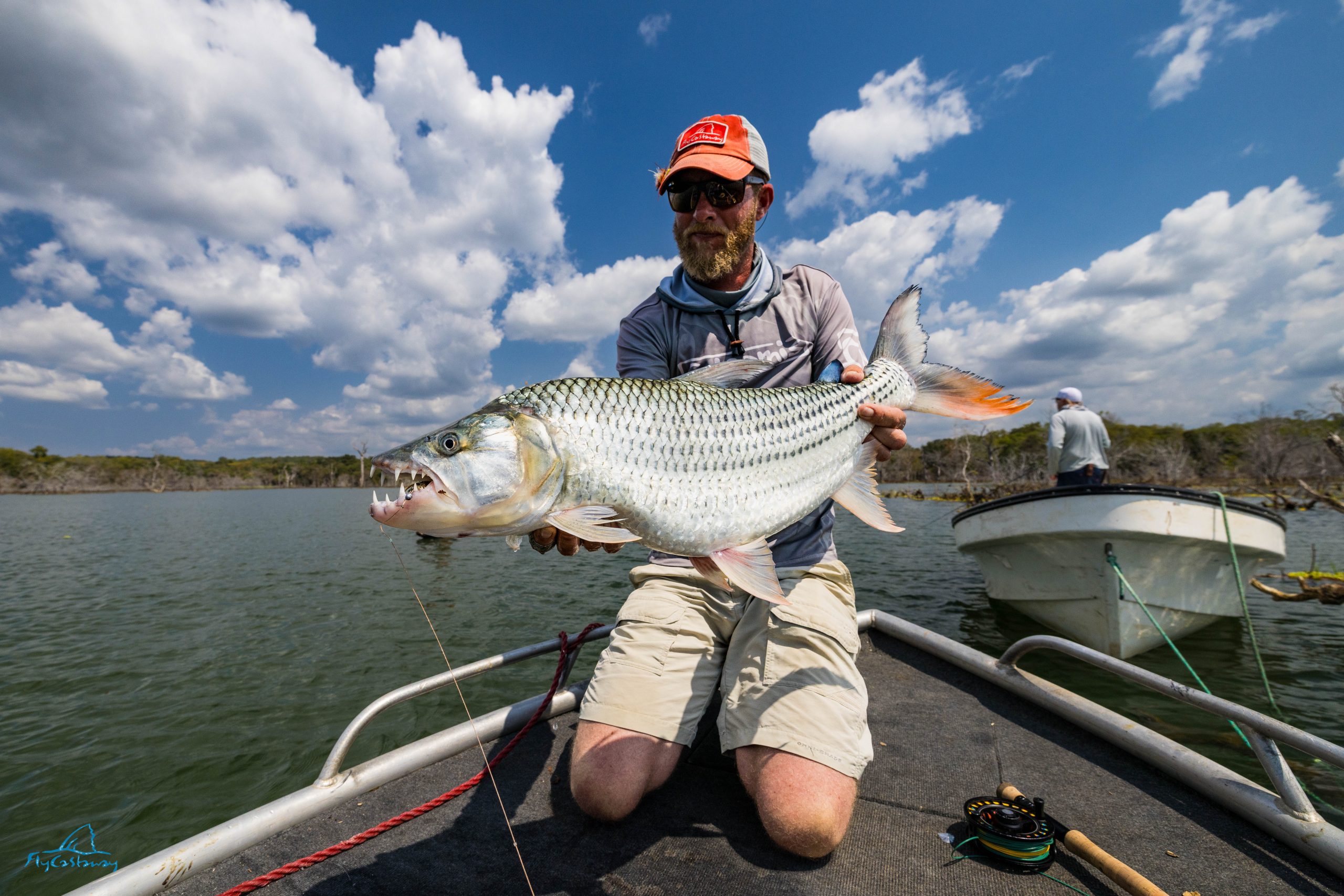
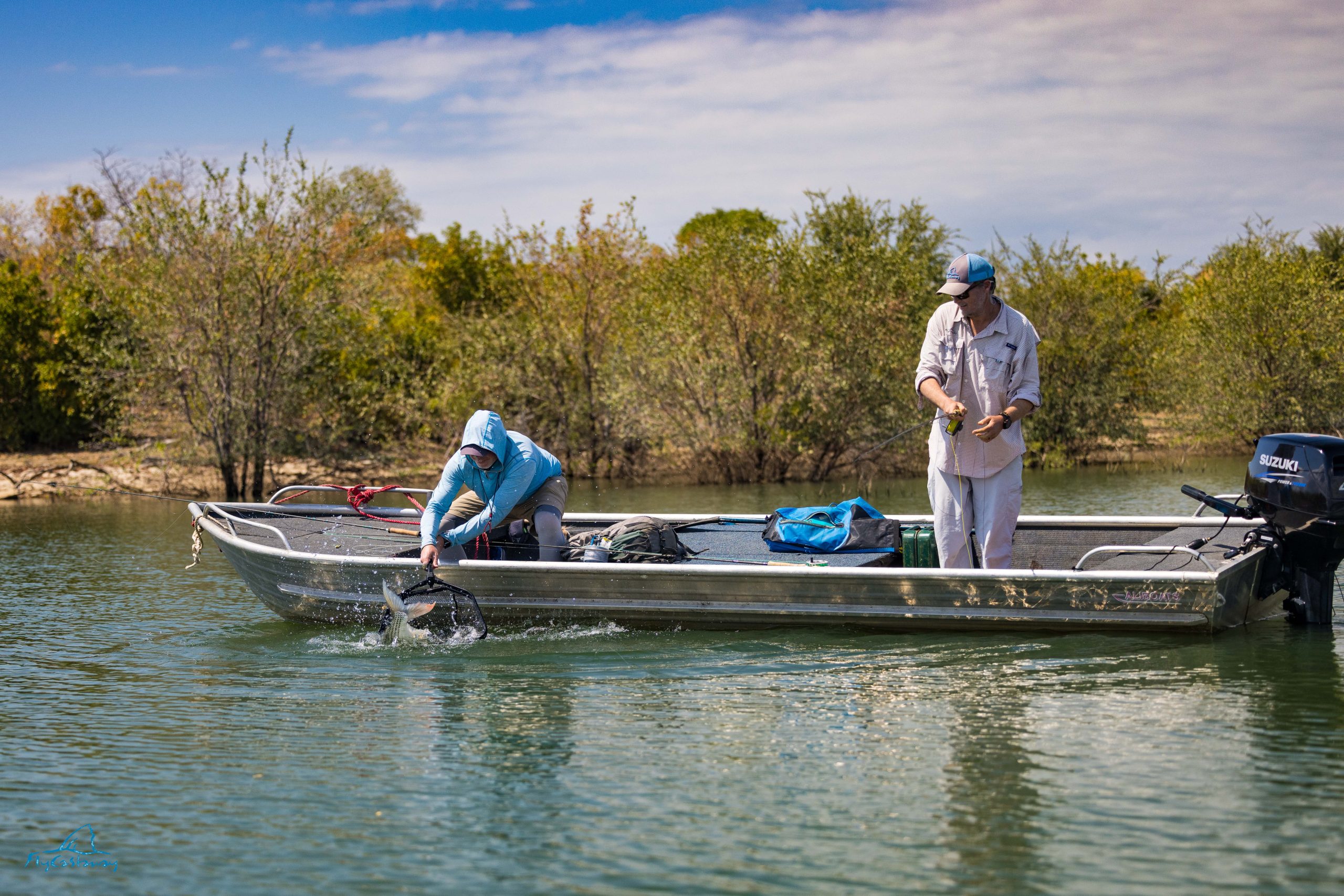
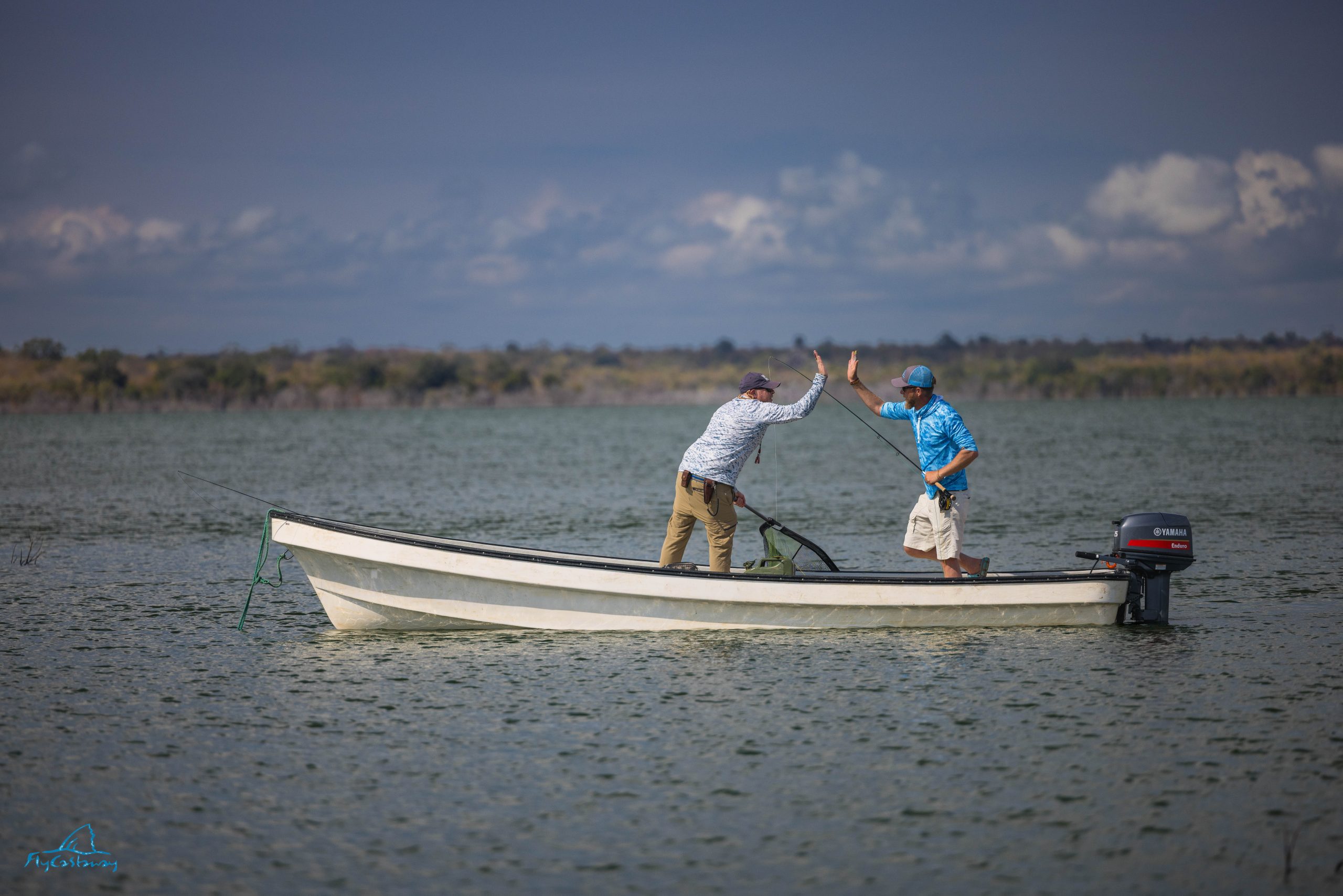
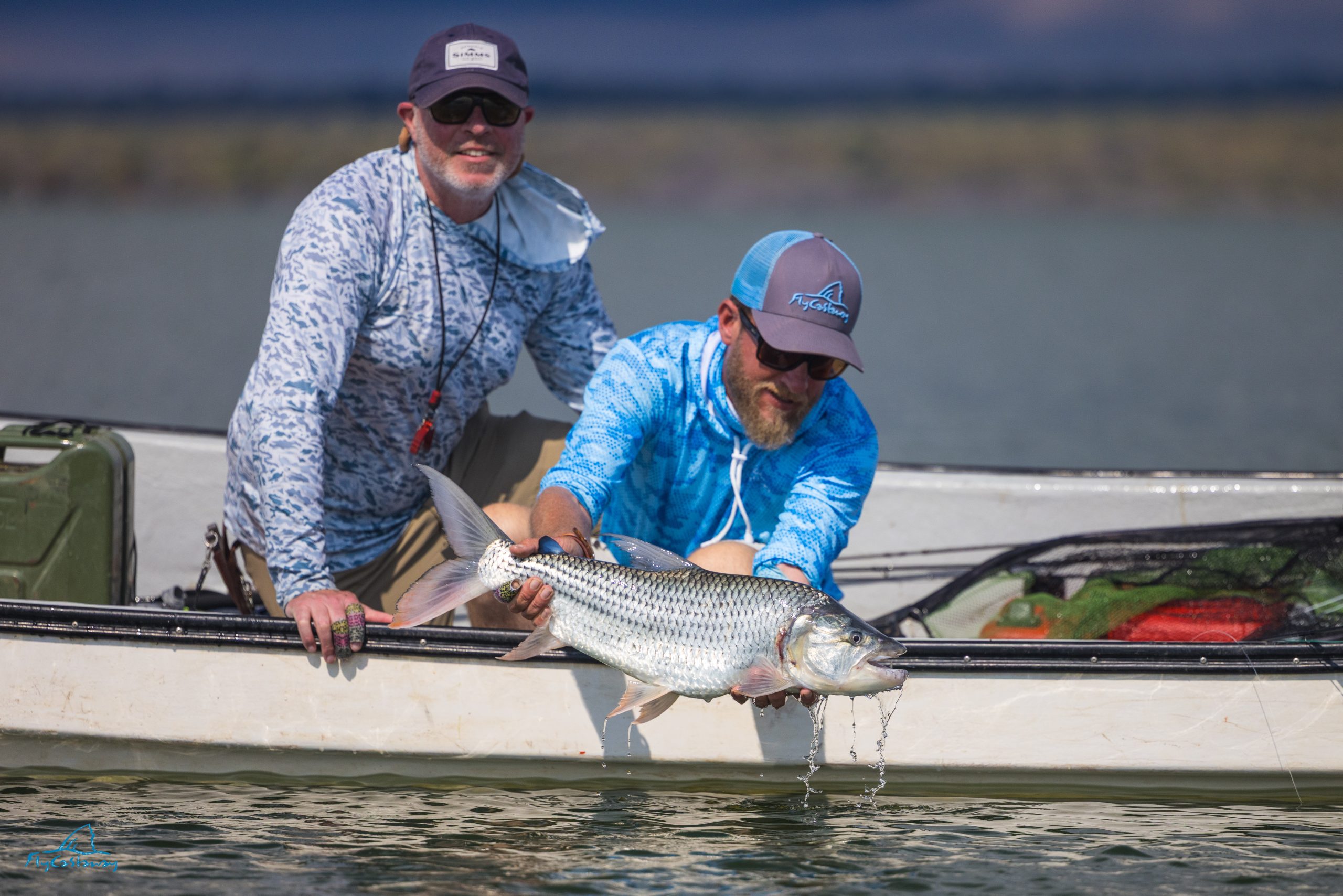
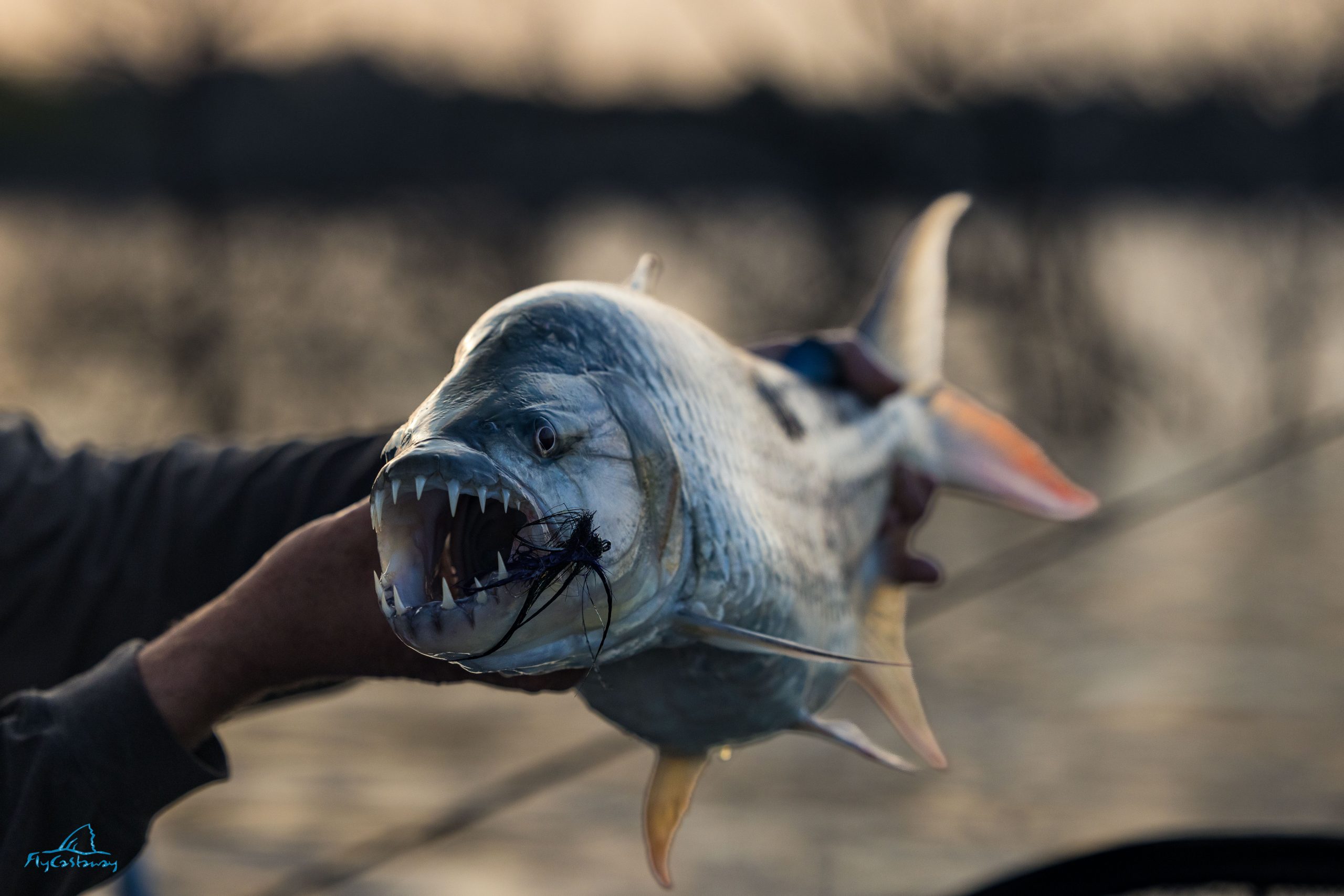
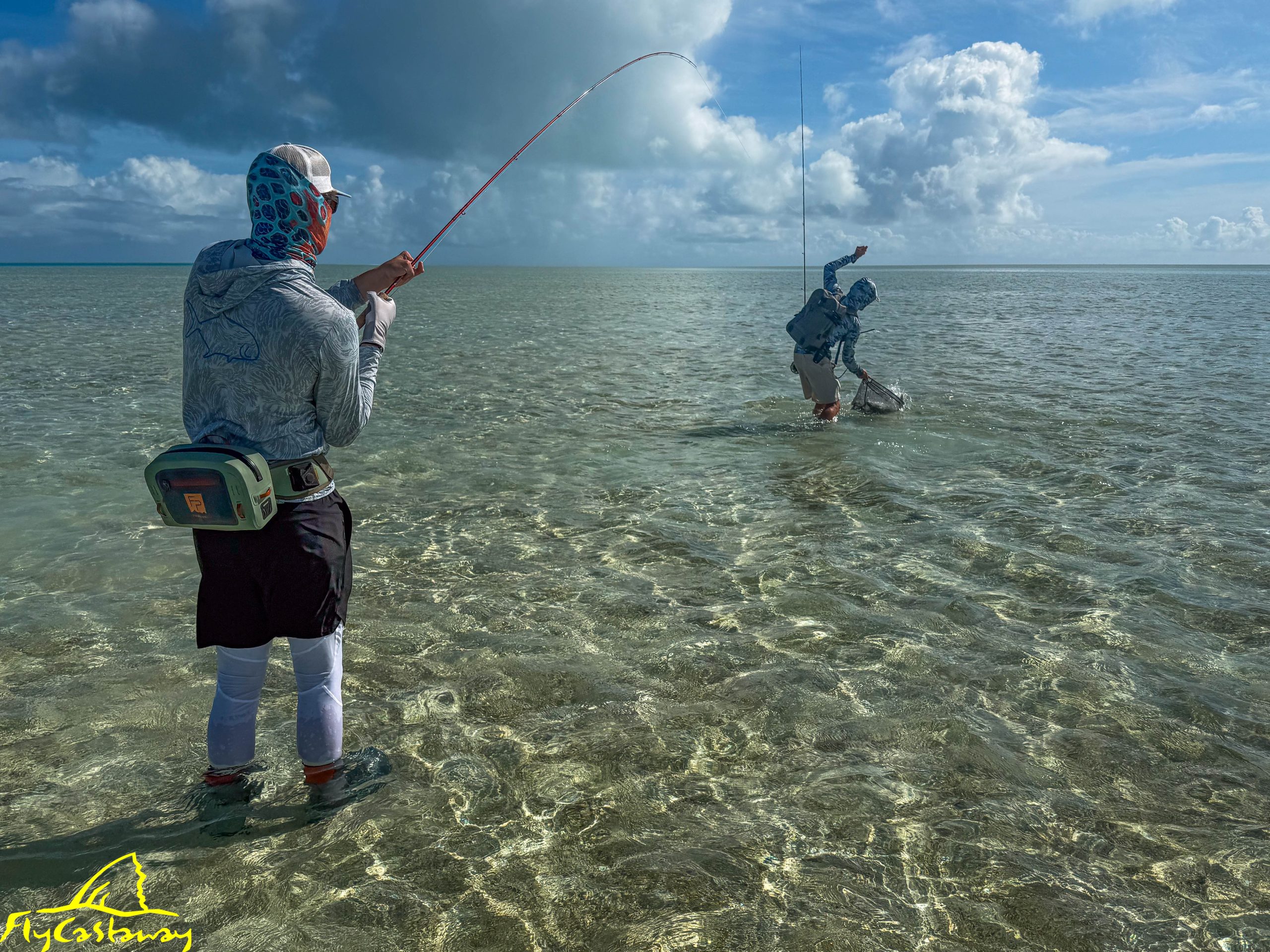
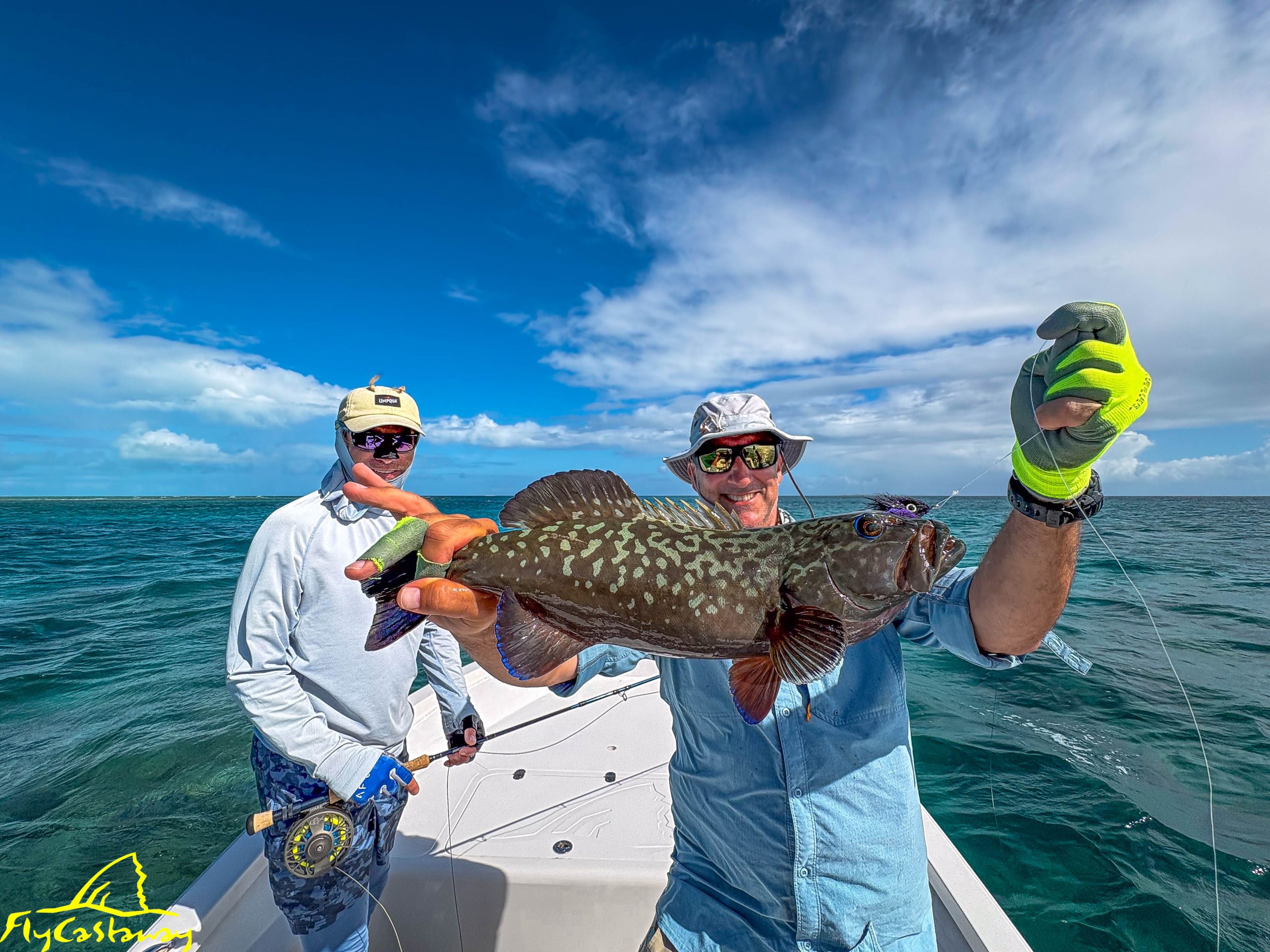
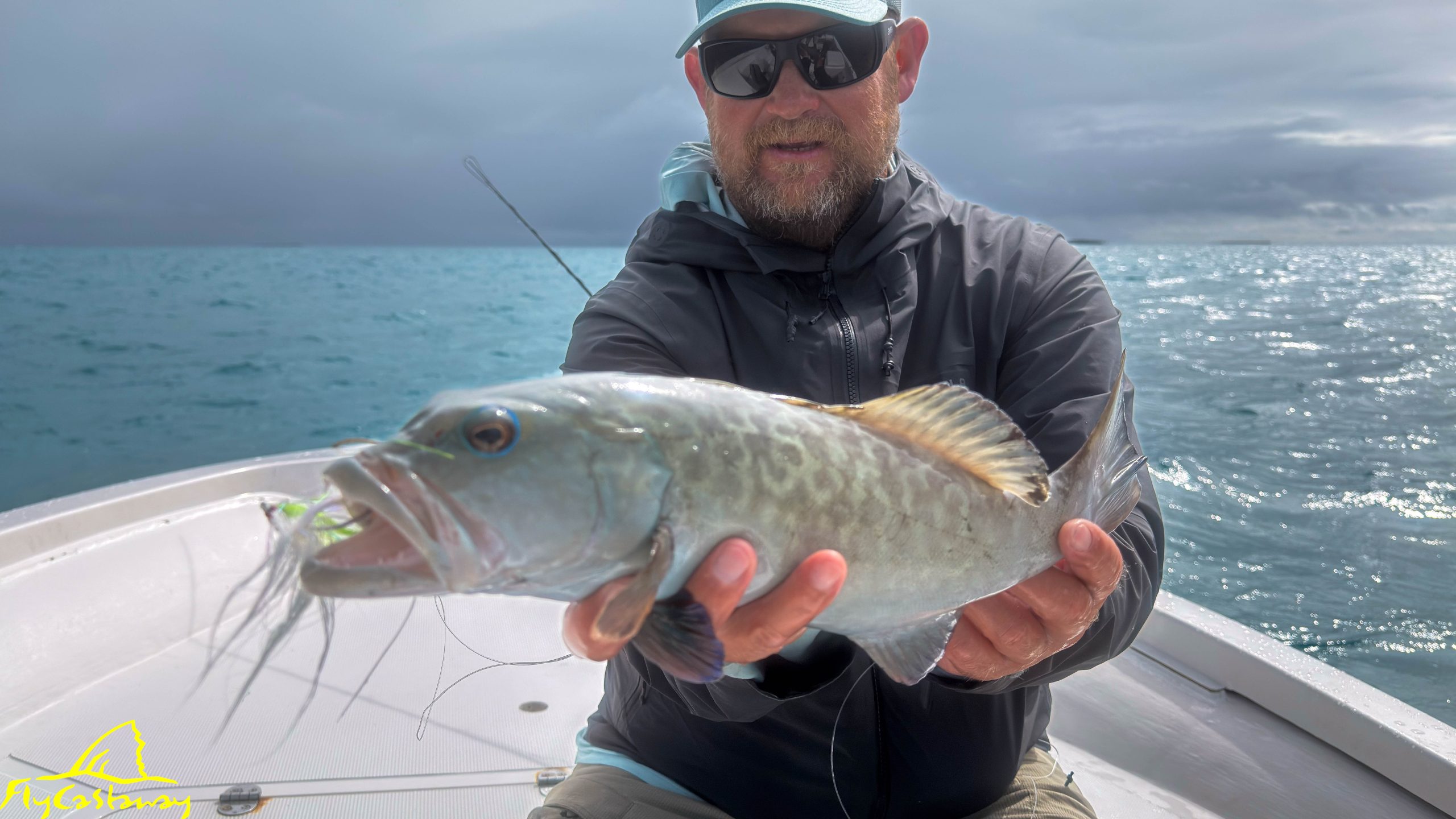
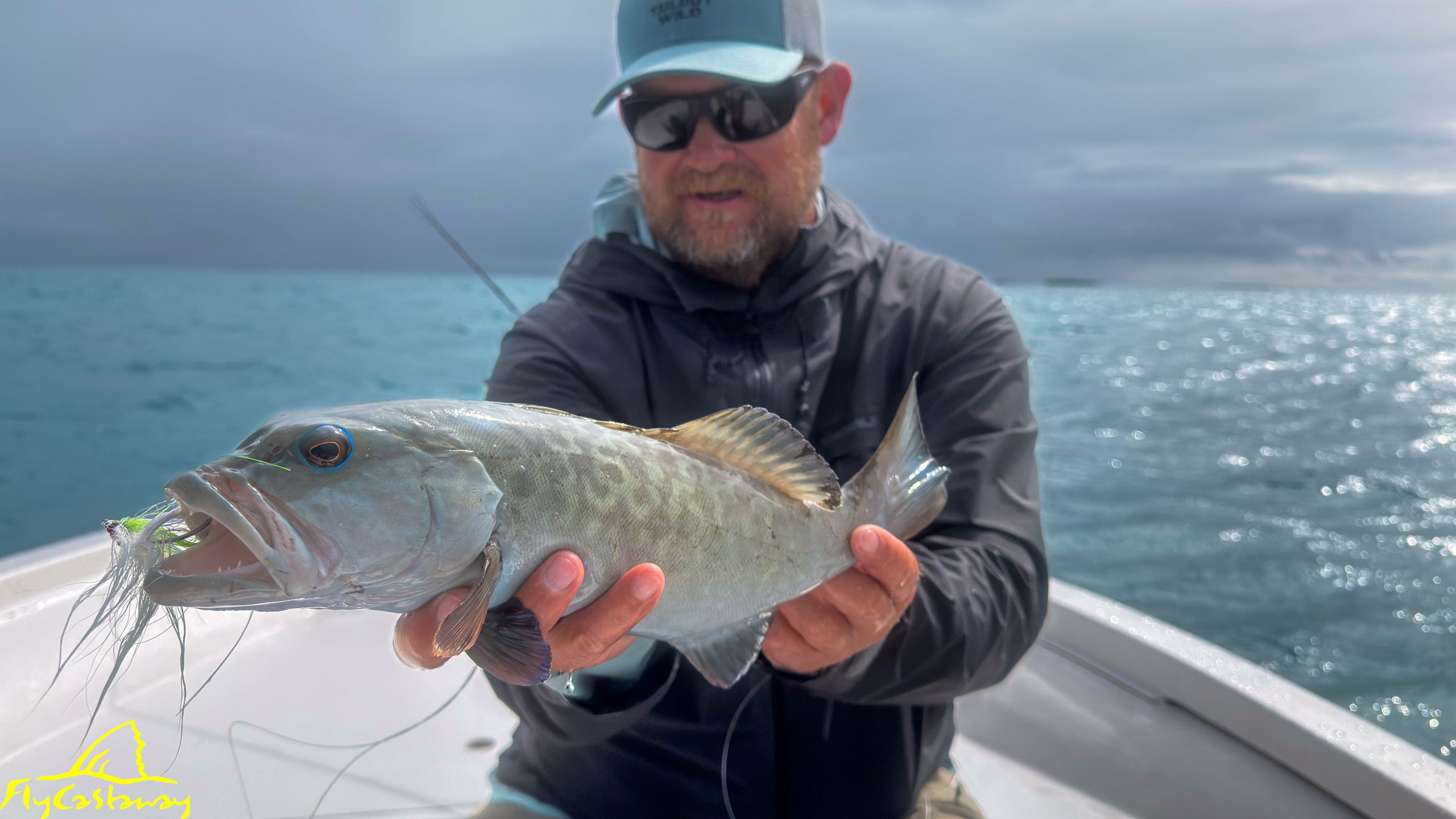
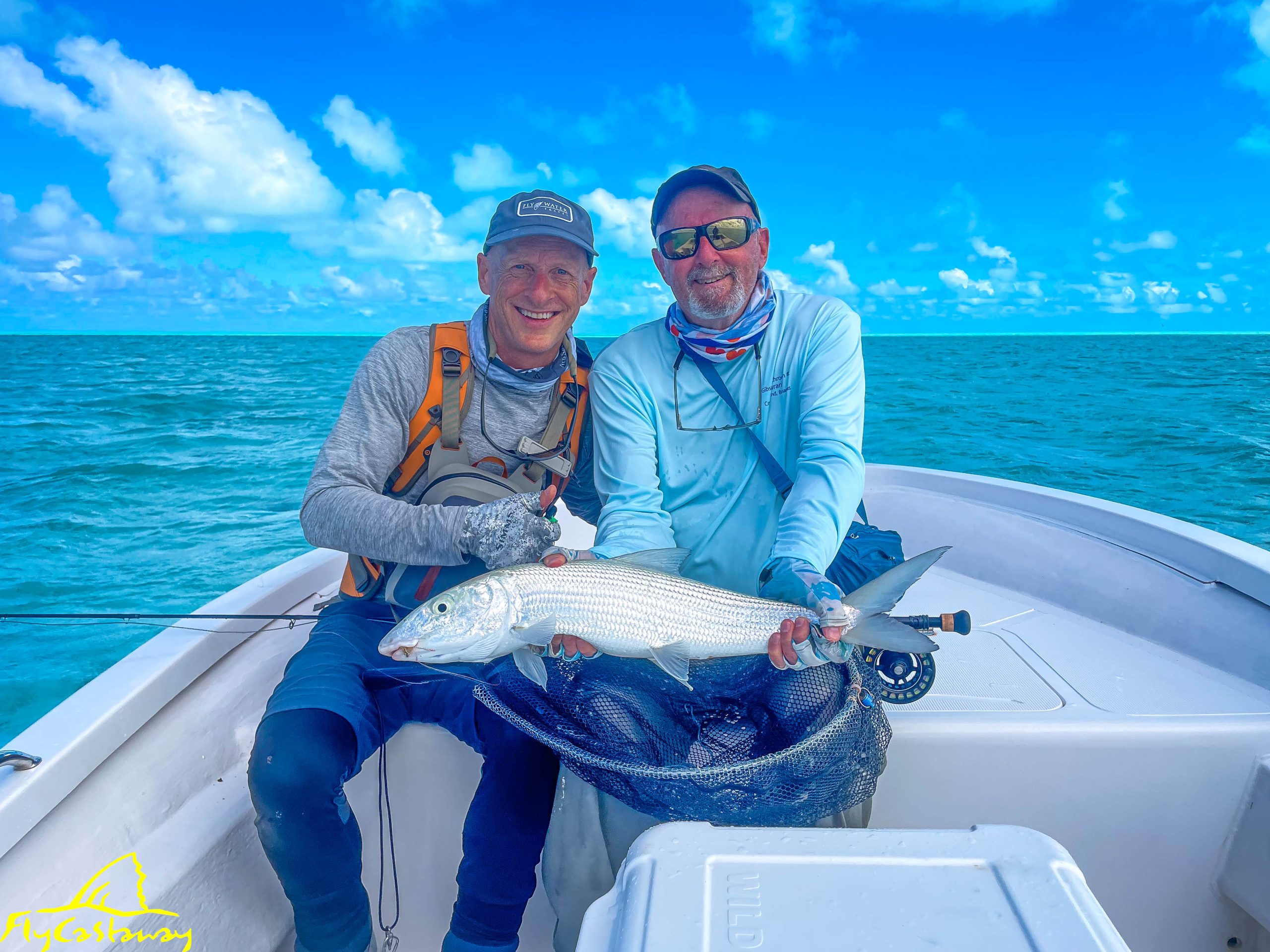
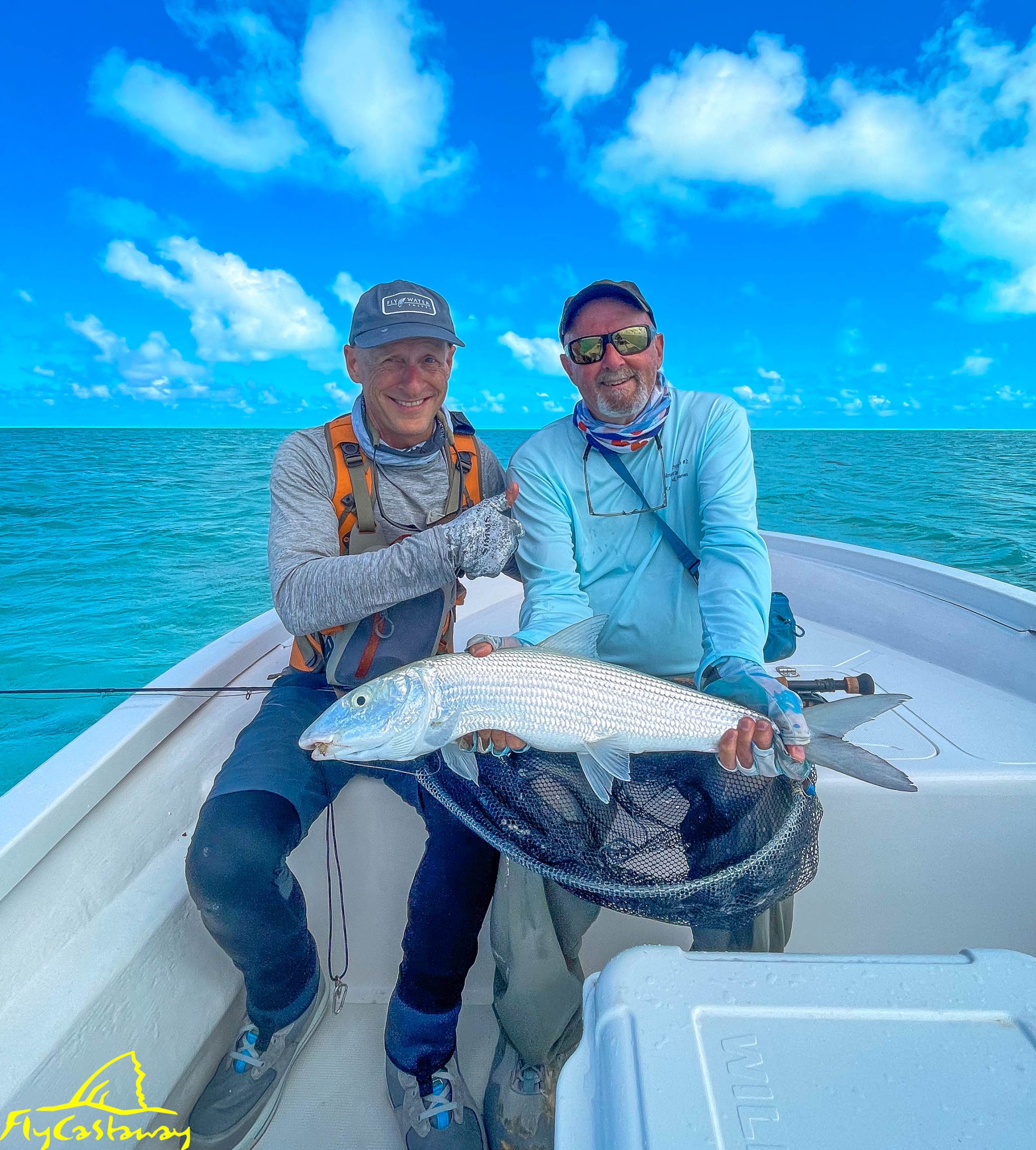
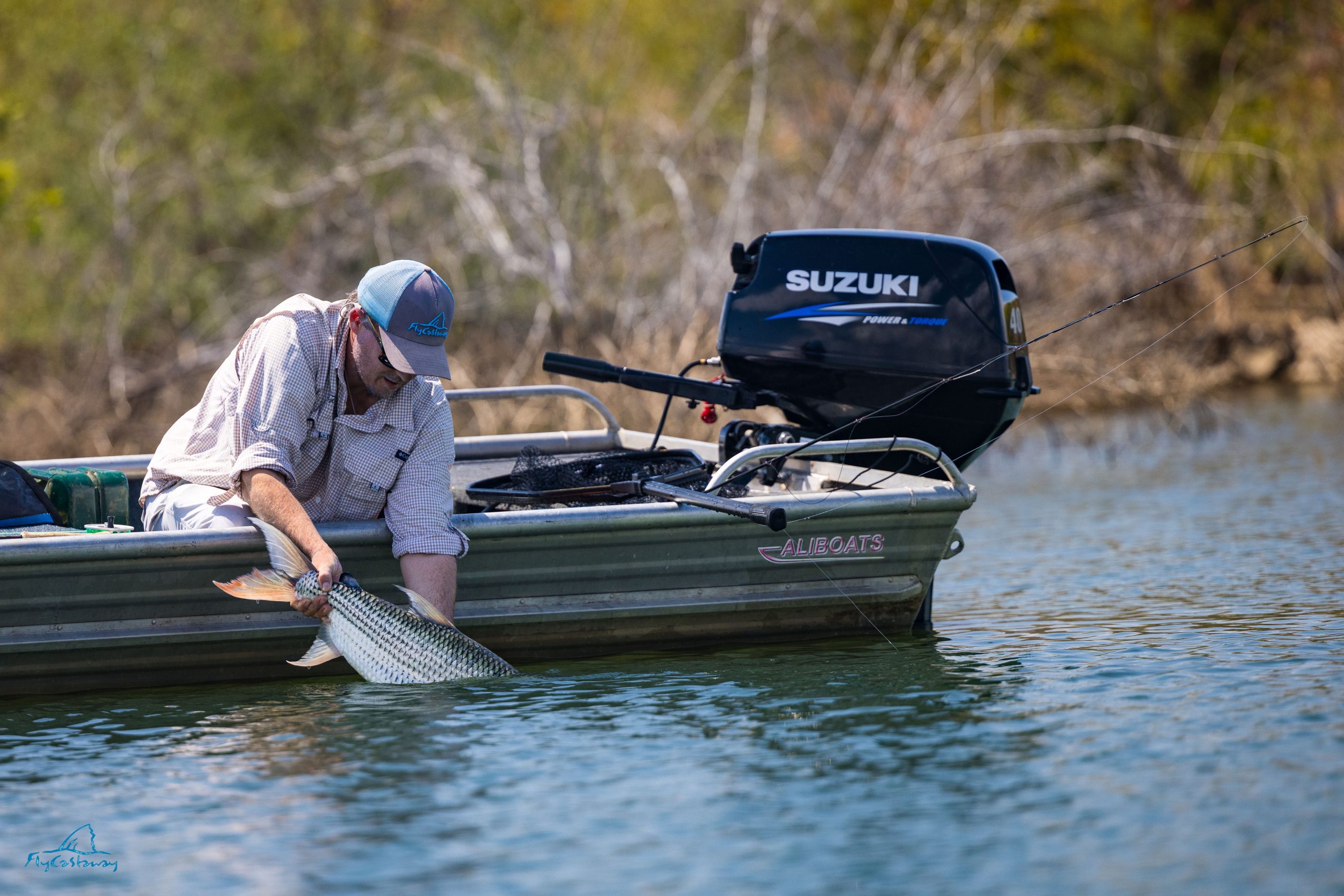
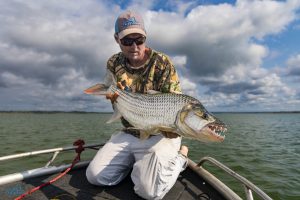
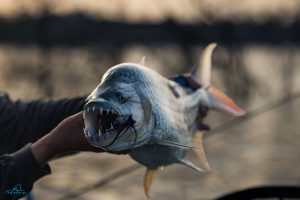
Eventually we returned to the bay where we’d started, this time approaching it differently. Not long afterwards Paul’s line came tight and a good fish tore around the boat before eventually sliding into the net. It was a thick, beautifully conditioned Tanzanian tigerfish of around nine or ten pounds—our first Lake Nyerere tiger. We took a few photographs, watched it disappear back into the clear water and carried on fishing with considerably more enthusiasm.
That afternoon both boats headed towards an area not far from camp where Tim had identified several promising pieces of structure. Paul and I pushed farther up one arm while G and Tim worked different water below us. Our exploration produced little and eventually we drifted back towards the other boat, where the mood aboard immediately told us they’d found something. Several fish had already been landed, most around or above the ten-pound mark.
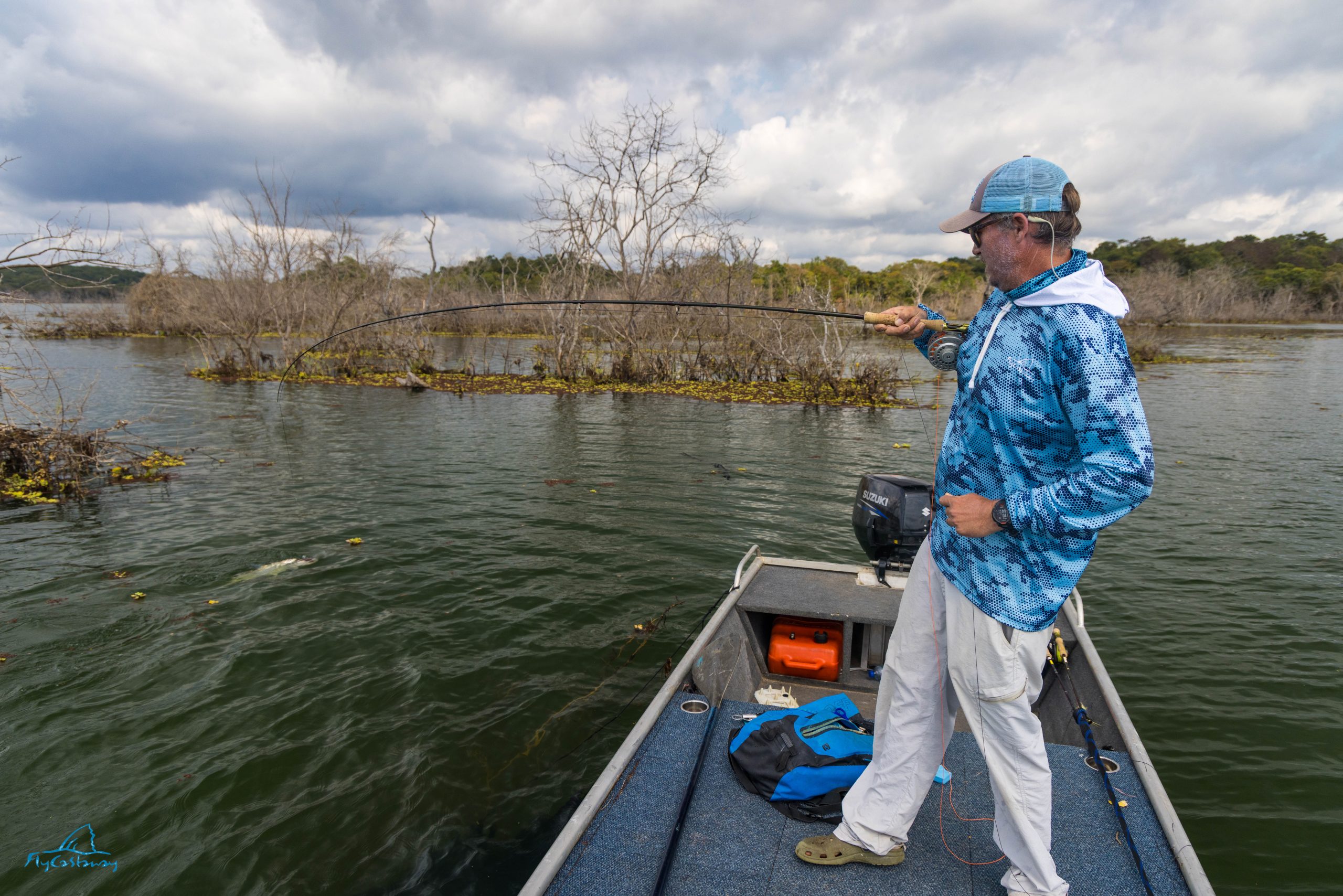
We began fishing nearby and soon started getting knocks of our own. The lake was teaching us something else too. With almost none of the current we were accustomed to when fishing tigerfish rivers, the takes felt different and our usual setting techniques needed adjusting. As the breeze disappeared late in the afternoon, tiny dimples began appearing across the surface. On closer inspection they were baitfish, some perhaps ten centimetres long and others closer to thirty, feeding near the surface. Amongst them were tigerfish.
A few more fish came to the boat, mostly around eight pounds. Nothing enormous, but strong, beautifully conditioned fish and enough action to suggest we were beginning to understand the water they preferred. The first day hadn’t produced fireworks, but we had a clue.
 Finding the Pattern
The following morning, that clue became something much more significant. Our first stop was relatively slow, but the second opened our eyes.
There were tigerfish everywhere.
For the first time we watched entire shoals following hooked fish, slashing at the fly hanging from a companion’s mouth in much the same way a pack of GTs might mob a hooked fish. The remarkable clarity of the water meant much of it unfolded visibly beneath the boat. Fish held against the shoreline, others in open water, and packs followed hooked fish almost all the way to us.
We landed fish to around eleven pounds, with an average somewhere in the eight-to-nine-pound range. More importantly, nearby areas containing similar structure produced fish too. A pattern was beginning to emerge.
The following morning I woke to waves crashing against the beach and felt the first pang of concern about the weather. As daylight arrived, however, the wind eased and the lake settled. After coffee and breakfast we returned to the areas we’d discovered and immediately found fish. The next spot produced too, and so did the next. Some areas held extraordinary concentrations of tigerfish; others fewer, but increasingly we were encountering bigger fish as we learnt to identify the most productive structure.
By now the mood in the boats had changed. We were no longer wondering whether Lake Nyerere held a worthwhile fishery. We were beginning to wonder just how good it might be.
Jurassic Park
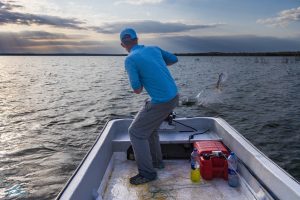 By Day Four, Tim and I wanted to push farther. A series of bays well beyond the areas we’d already explored had caught our attention and, with our modest boat-and-engine combination, it was a long run to reach them. Eventually we arrived at the first one and it looked perfect, but unfortunately a huge pod of hippos thought so too. We tried easing into position before their increasingly agitated behaviour made the decision for us. Whatever tigerfish lived there would have to wait.
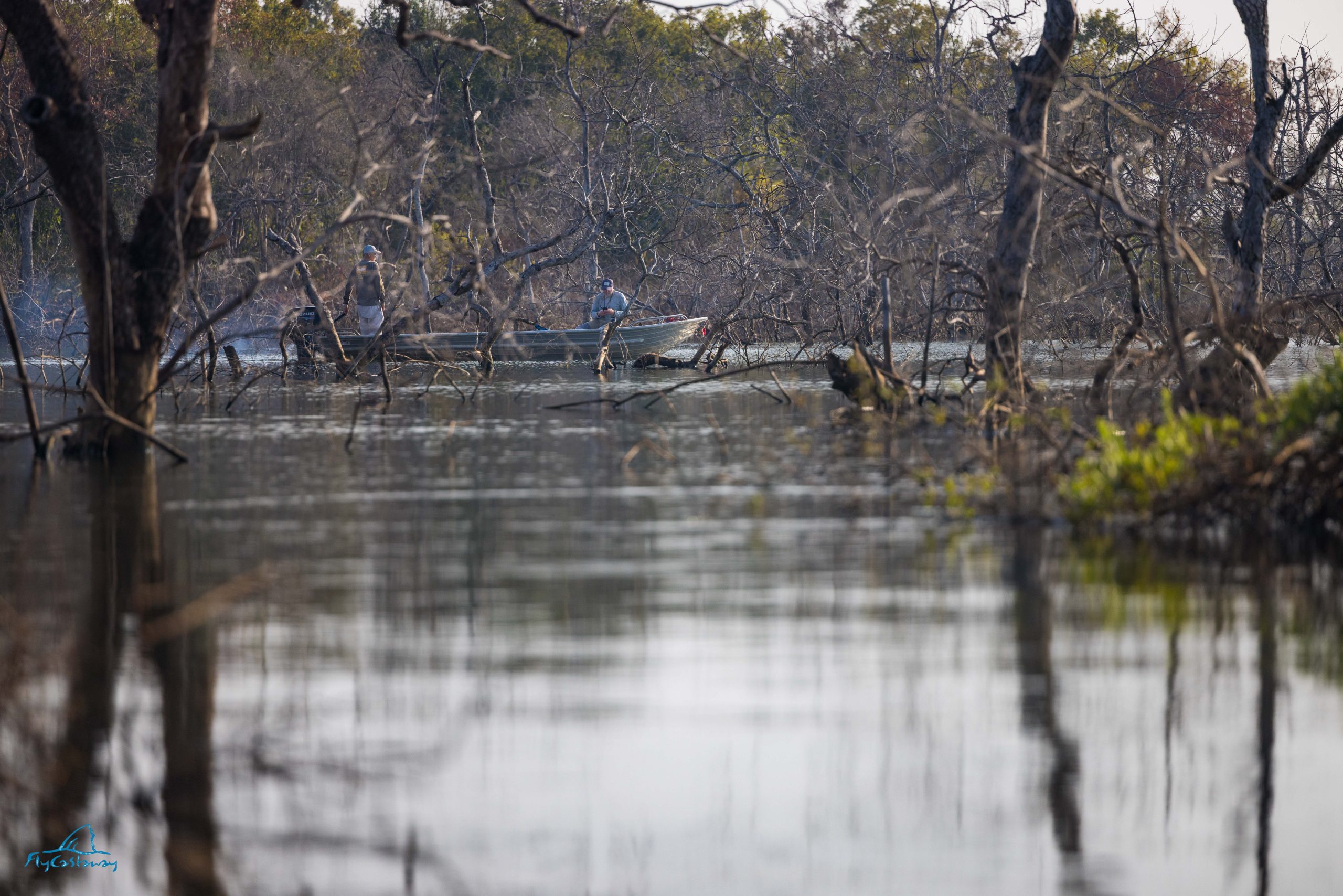
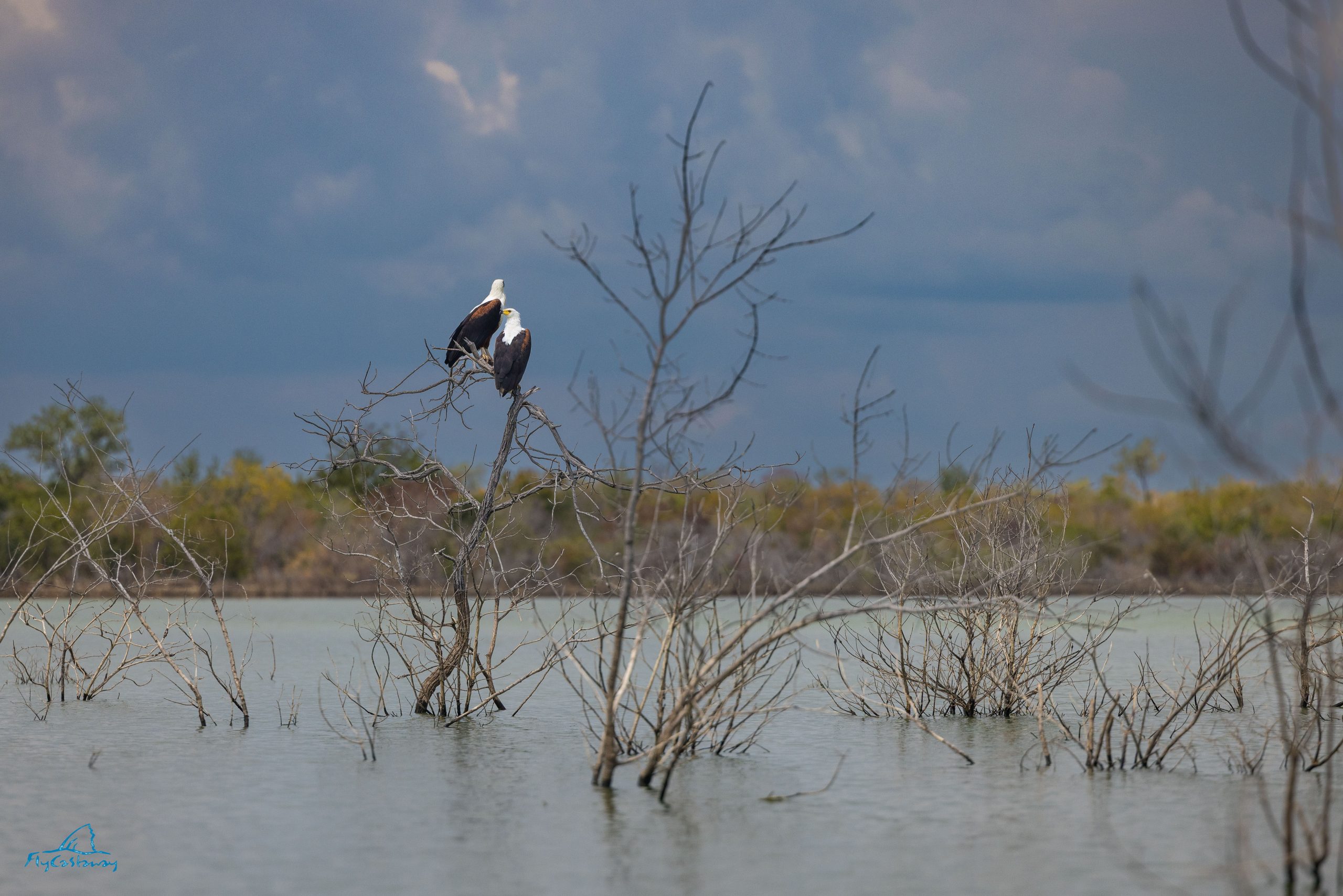
On the run up we’d noticed another piece of water that looked promising, so we doubled back. It was spectacular. Huge dead trees flanked the shoreline with what appeared to be a broad lagoon behind them, while two fish eagles watched us from a nest above. Hippos grunted in the distance but had enough room to tolerate our presence, so we moved into position and began fishing.
Almost immediately Tim got a bite, then I got one, followed quickly by another. My conversion rate was appalling, but Tim began laying into them. Tigerfish seemed to be everywhere and at one point were even attacking the slowly spinning propeller as we drifted. The whole scene felt strangely prehistoric: drowned trees, hippos, fish eagles and clear African water filled with predators apparently trying to eat anything smaller or weaker than themselves.
We christened it Jurassic Park.
I’ve been fortunate enough to catch some big tigerfish over the years, but generally you work incredibly hard for them. This was the opposite. Judging by the number of strikes, there had to be shoals of eight-to-twelve-pound fish moving through the bay.
Later we went looking for G and Paul and discovered that their experience had been even more intriguing. They had been slowly sneaking along a bank when they began seeing tigerfish cruising the shoreline. G sight-cast to one in perhaps twenty-two inches of water and landed it, a fish of around ten pounds. He had also lost another good fish they’d watched riding high in the water. Paul had barely bothered casting; he was having too much fun standing on the bow looking for them.
Sight-fishing ten-pound tigerfish in clear, shallow water was not something any of us had expected to find here, and the possibilities it suggested were enormously exciting.
After a late lunch on the boats, we returned to Jurassic Park. As the afternoon light softened, the place came alive again—strikes, jumping fish, shouting between boats and cameras clicking. It was another glimpse of what this lake might be capable of.
Into the Wild
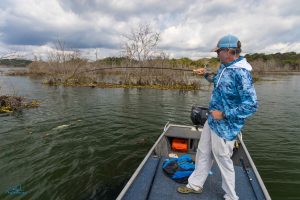 Day Five took us farther again and, as we travelled towards one of Tim’s marks, the landscape began to change. The scattered woodland gave way to something darker and denser. Huge trees formed an almost continuous canopy along the shoreline, with narrow creeks disappearing into vegetation that looked completely impenetrable. It was the sort of country that makes the hair on the back of your neck stand up.
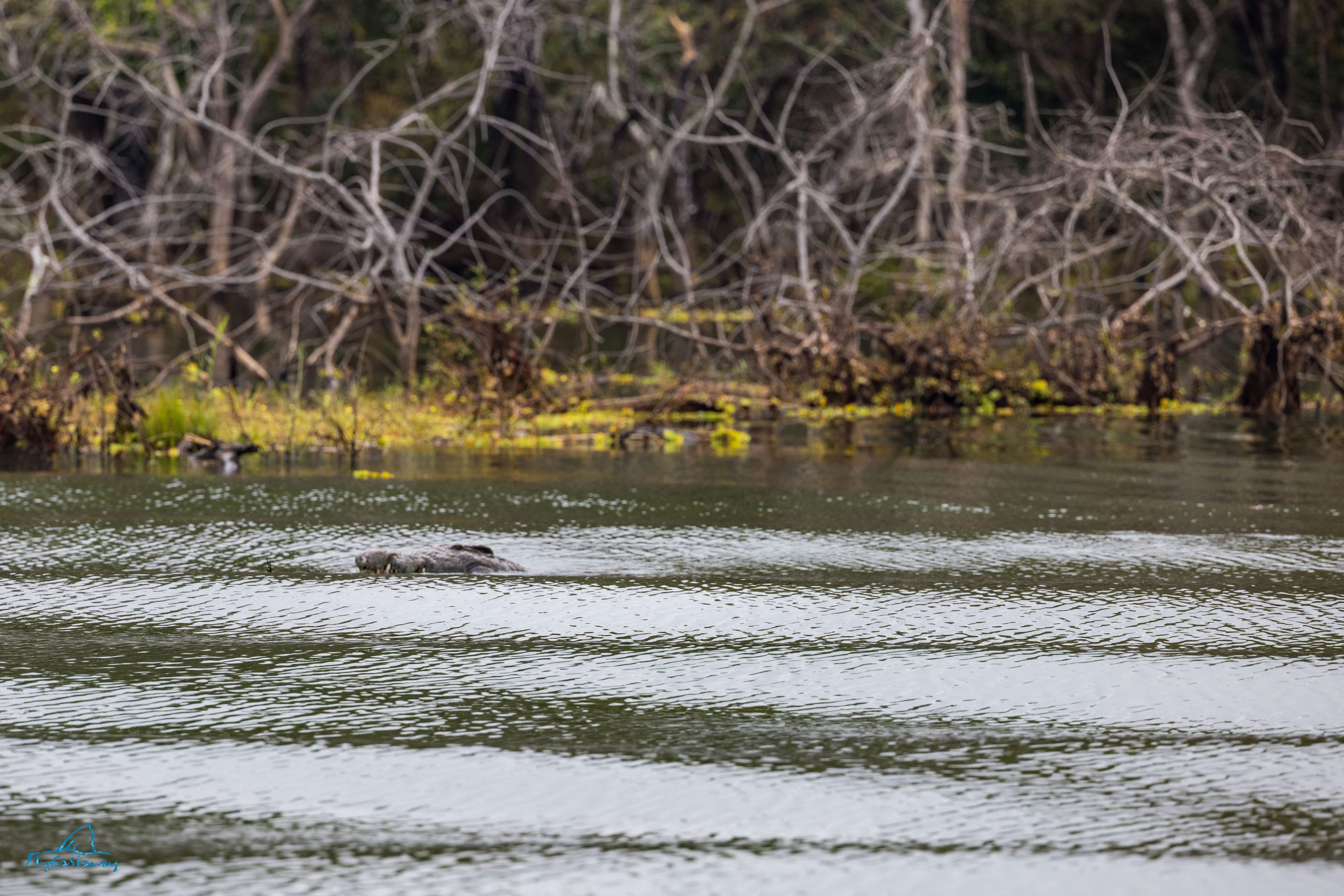
We stopped near the entrance to one creek to look at a large raptor perched in a dead tree. Within seconds we heard G and Paul shouting from the other boat: “Croc! Croc! Big croc!”
We couldn’t see it, but their reaction suggested starting the engine would be sensible. When we reached them, they explained that a huge Nile crocodile had surfaced almost immediately after we’d stopped and had begun swimming directly towards our boat with considerable intent. Their estimate was that it was roughly as long as the boat. We decided birdwatching could wait.
Eventually we reached the area we’d come to explore. Tim and I eased into the entrance of a narrow lagoon littered with enormous submerged tree stumps. After carefully scanning the water for more reptilian friends, I made my first cast. Nothing. My second landed beside one of the stumps and was eaten immediately.
The fish came off, but moments later Tim was tight. Several more followed before a much bigger fish bit me off above the wire. When the wind picked up and the action slowed, we continued exploring. G and Paul, fishing farther up, were apparently surrounded by shoals of fish, but we wanted to keep moving. We were now specifically looking for the bigger ones.
Eventually Tim and I found a narrow line of submerged trees extending away from the bank, with baitfish swimming unusually high in the water column. The next instant everything exploded as baitfish erupted into the air and large tigerfish crashed through them.
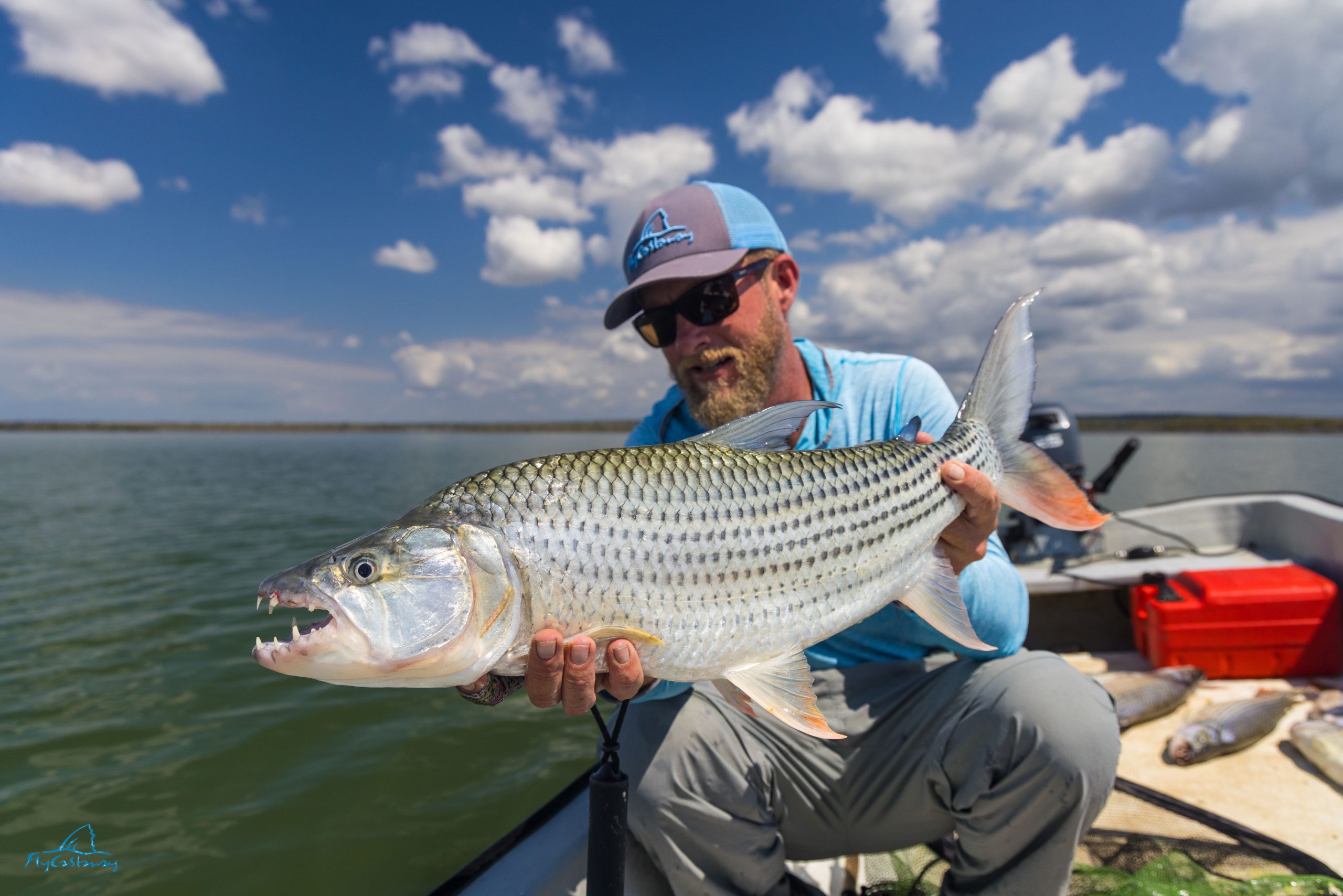
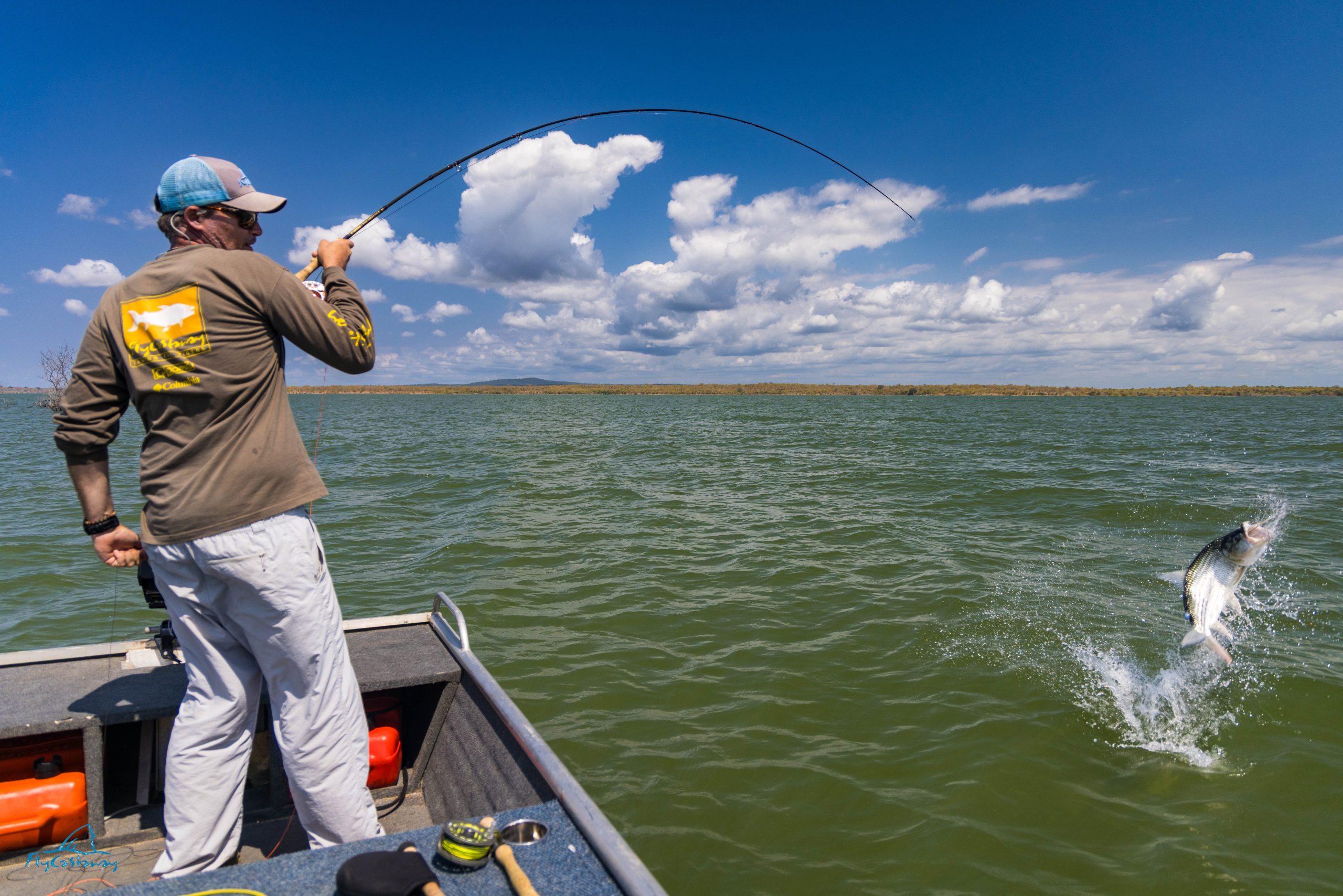
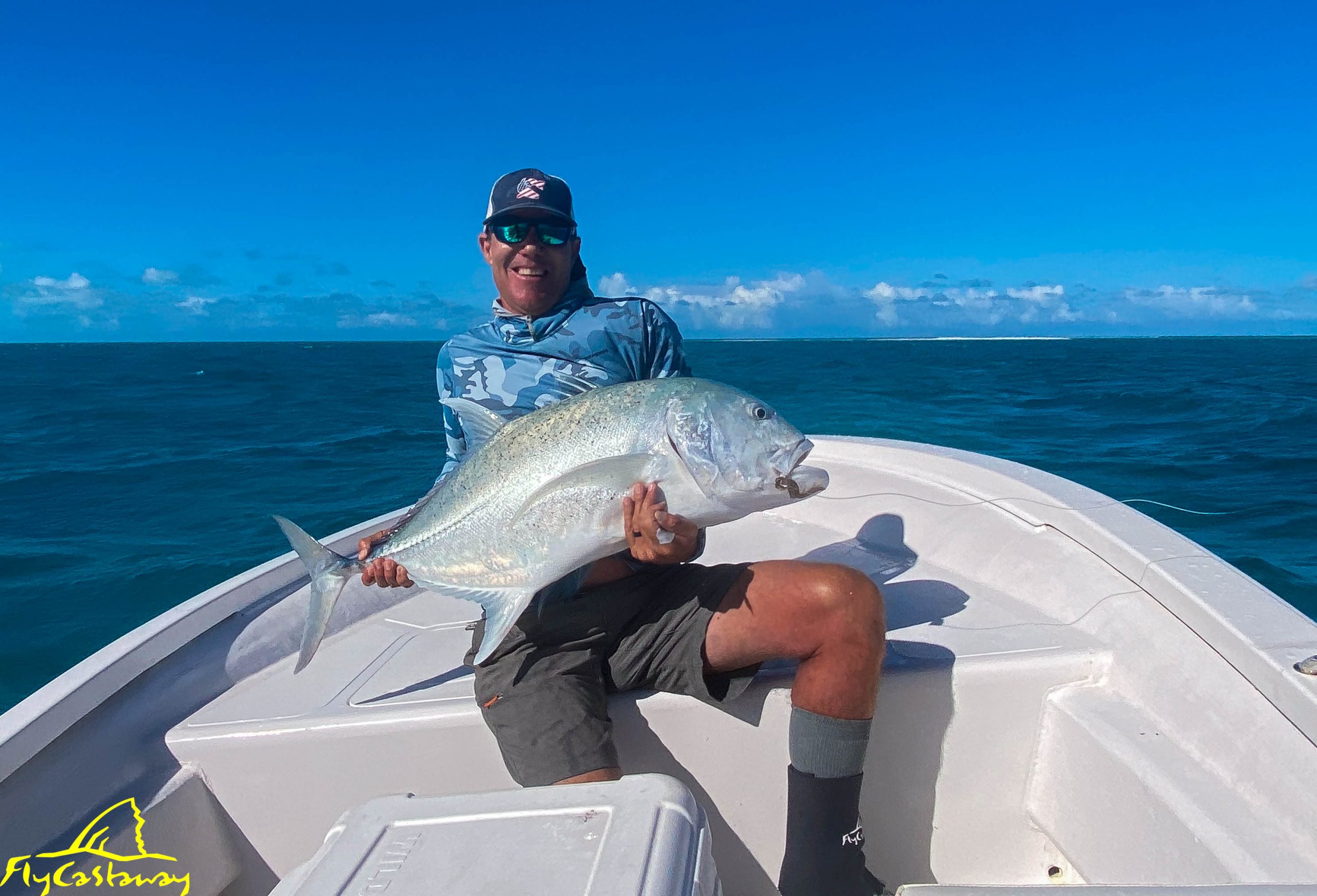
As we manoeuvred the boat into position, we witnessed something I will never forget. A large vundu catfish had what looked like a dinner-plate-sized silver chessa in its mouth. Around and behind it cruised perhaps ten large tigerfish, all trying to tear pieces from the struggling fish. Tim, standing at the back of the boat, managed to get a cast amongst them and as his fly passed a submerged stump it was smashed. After a chaotic minute or two, we slipped the net beneath a magnificent thirteen-pound blue tigerfish.
Then things became ridiculous. One of my casts sailed too far and wrapped around a branch. Rather than waste time retrieving it, I dropped the rod and grabbed the fully rigged spare. A moment later I noticed that the fly from my first rod was dangling from the branch, just touching the water.
I had a fairly good idea what might happen.
The line was suddenly ripped violently from the tree as a ten-pound-plus tigerfish swimming just beneath the surface ate the stationary fly. I dropped the second rod, grabbed the loose fly line and found myself attached to a tigerfish by hand. It stayed on for a few seconds before coming free and, given the circumstances, I was almost relieved.
For a while we simply stood there trying to take in what was happening around us. It felt less like fishing and more like being dropped into the middle of a wildlife documentary.
The Blue Tigers
 Once things settled, we moved farther along the shoreline and found another narrow line of submerged trees extending from a small peninsula. It didn’t take many casts before Tim’s line came tight again and immediately we knew this fish was different.
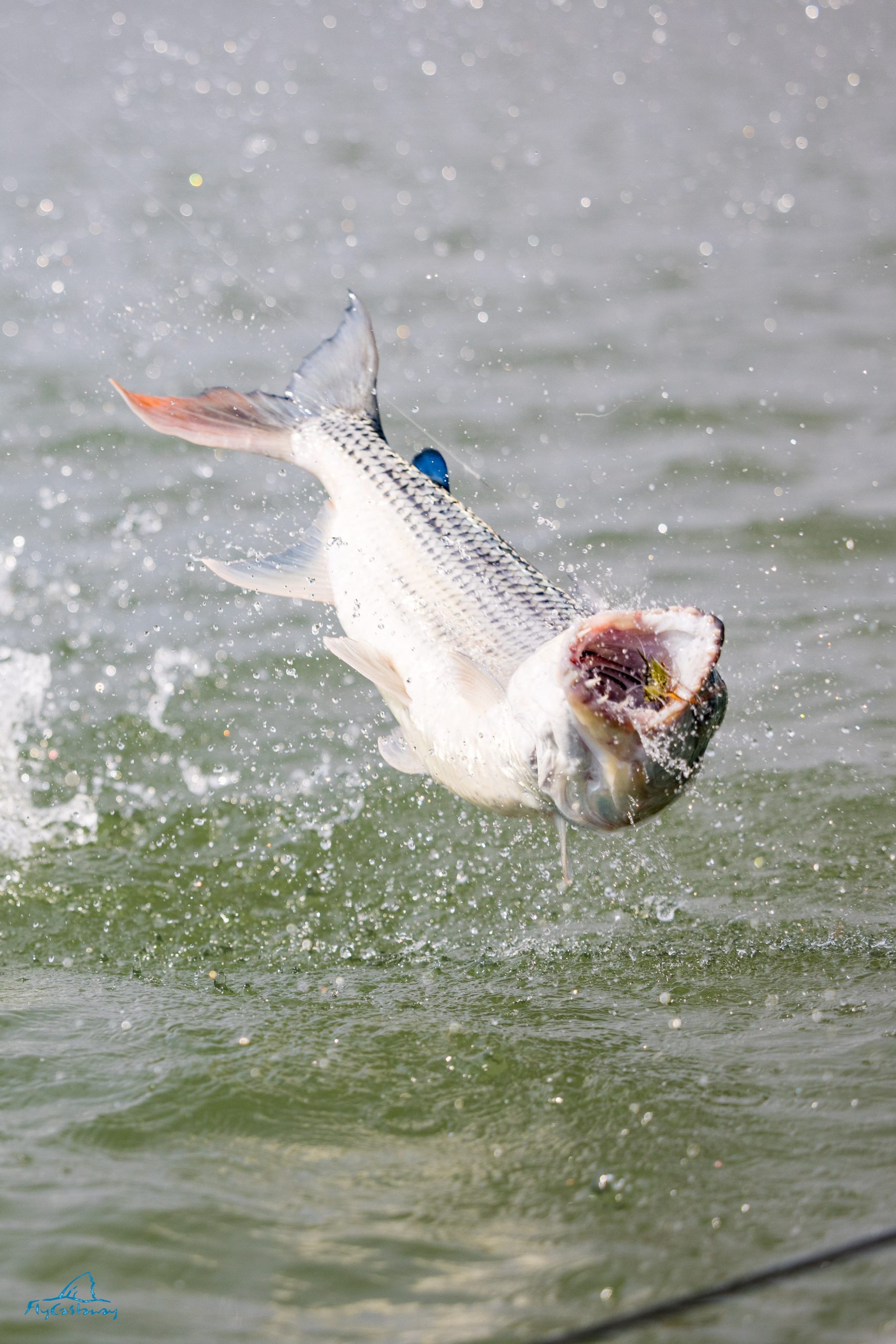
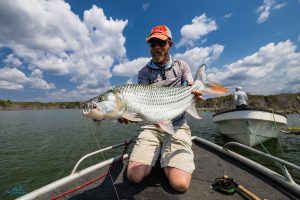
It pulled hard and stayed deep before eventually launching itself clear of the water. There were two large submerged stumps beneath the boat and for several uncomfortable moments the outcome could have gone either way, but eventually I managed to get the net underneath it.
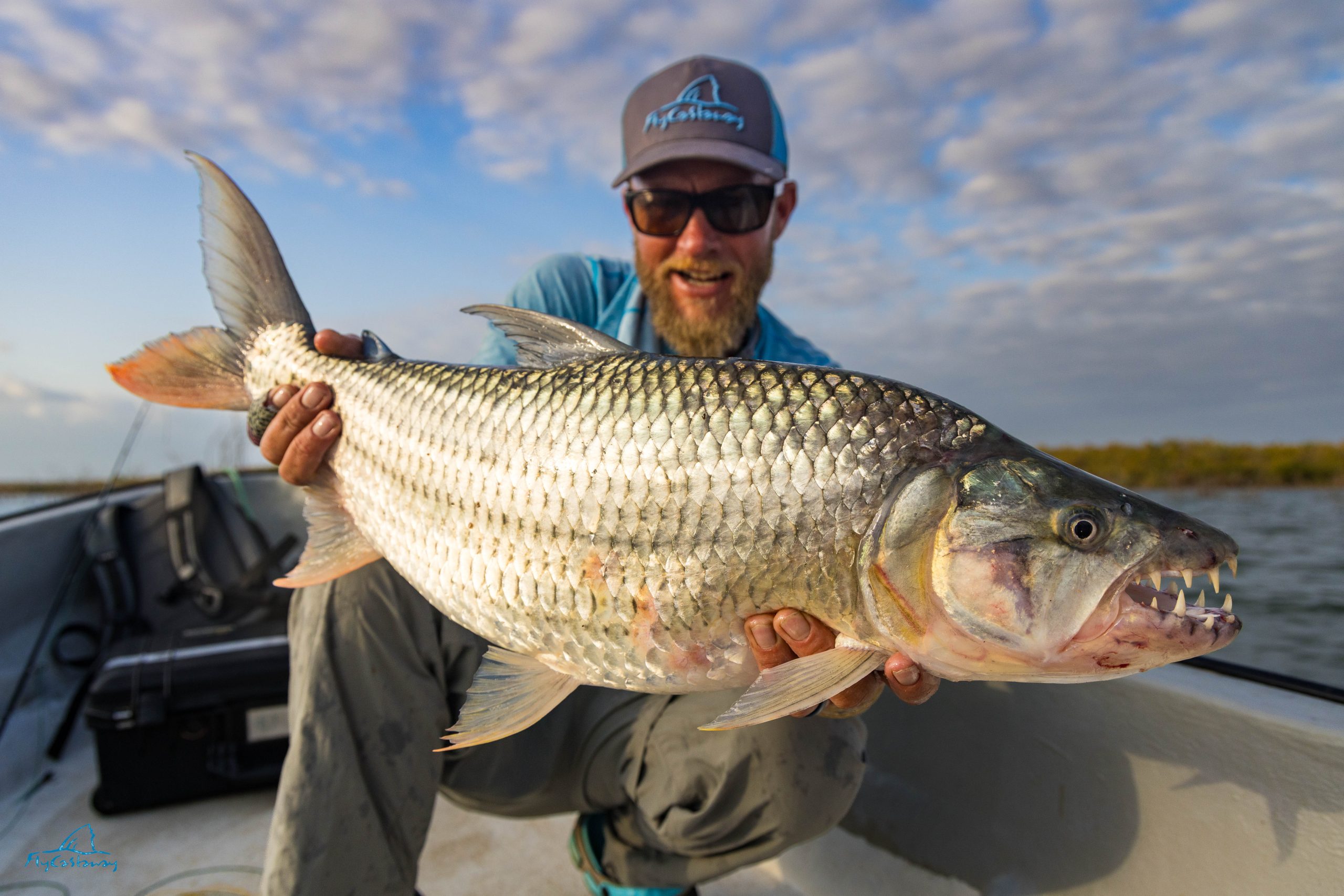
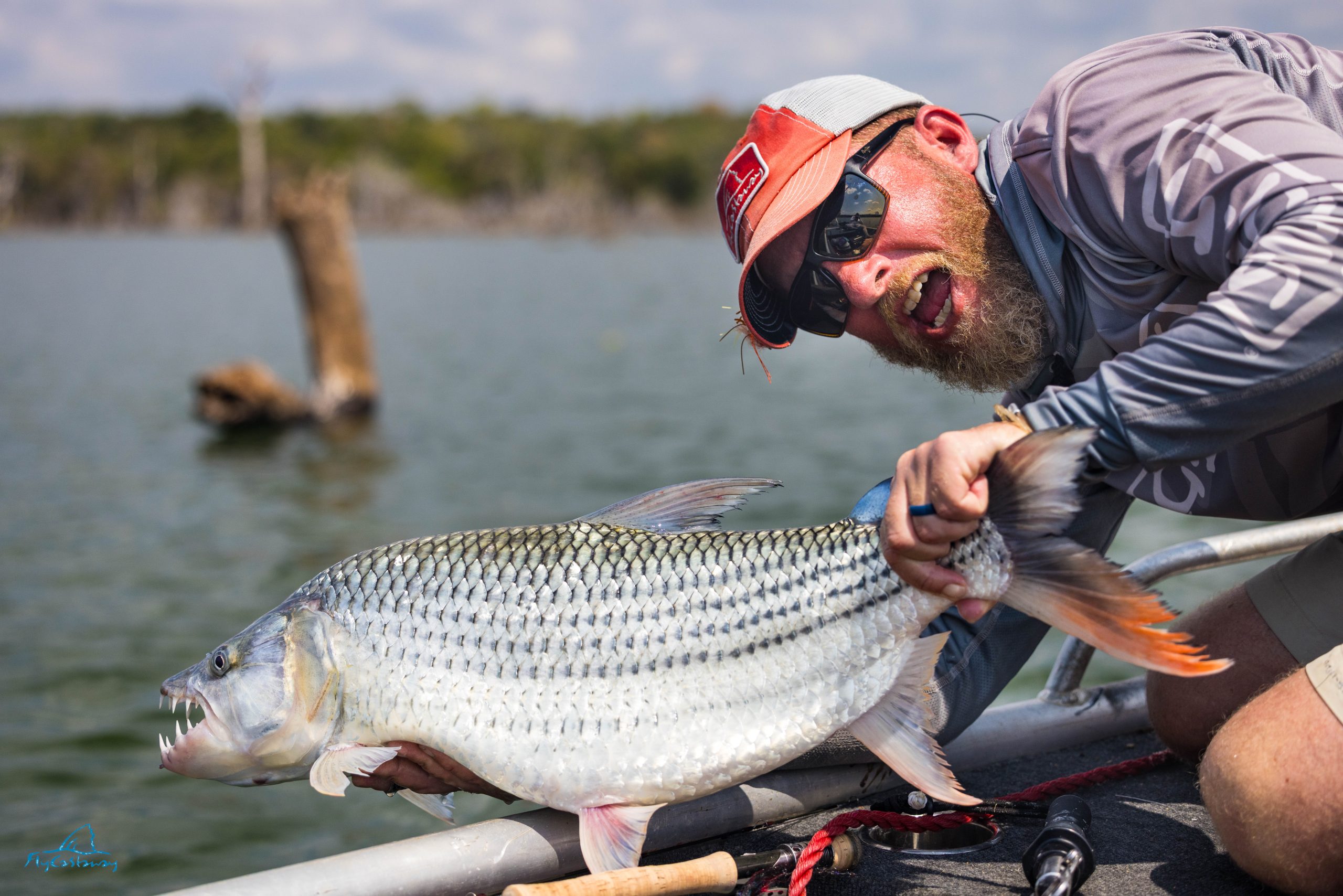
On the scales it went 16.5 pounds.
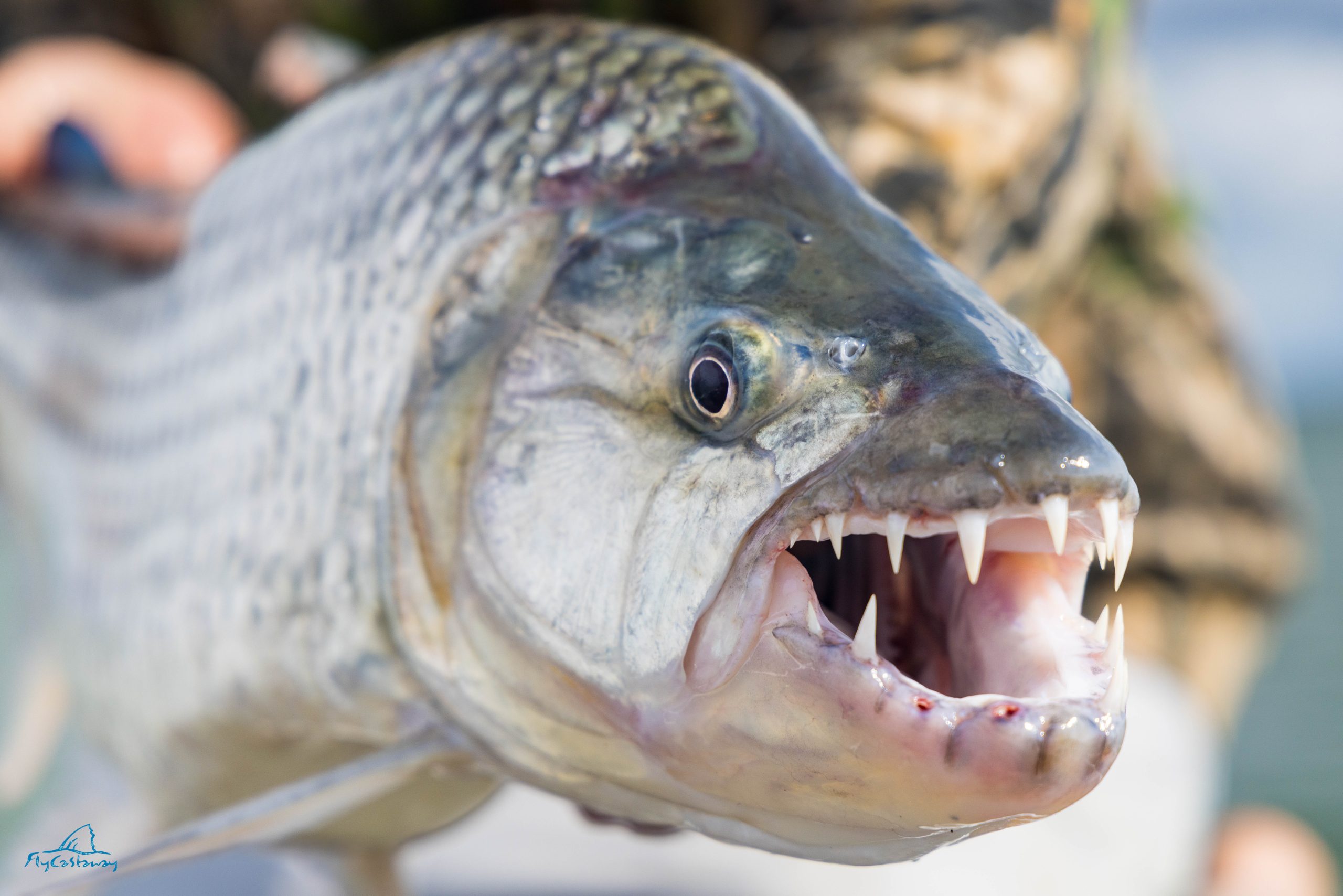
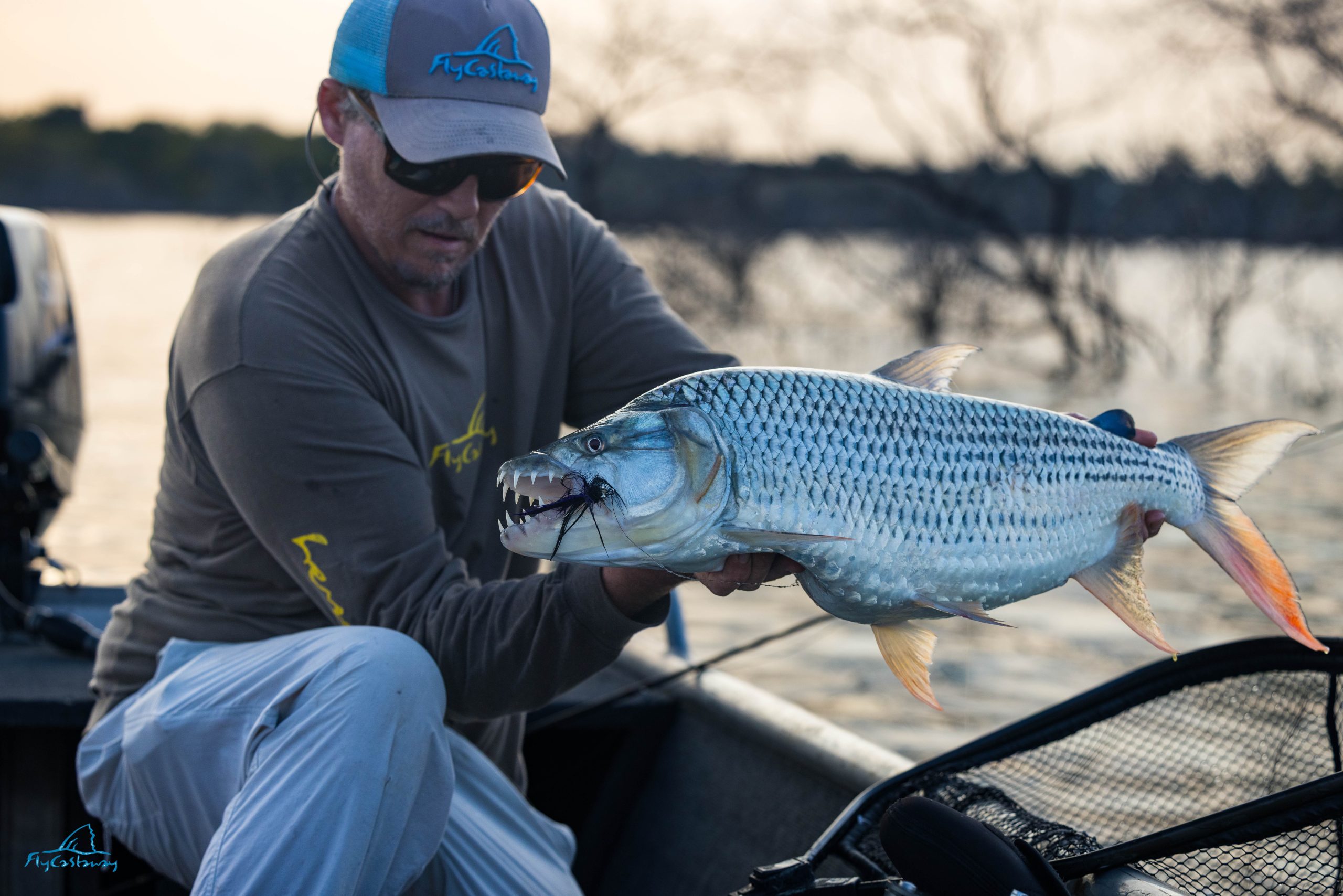
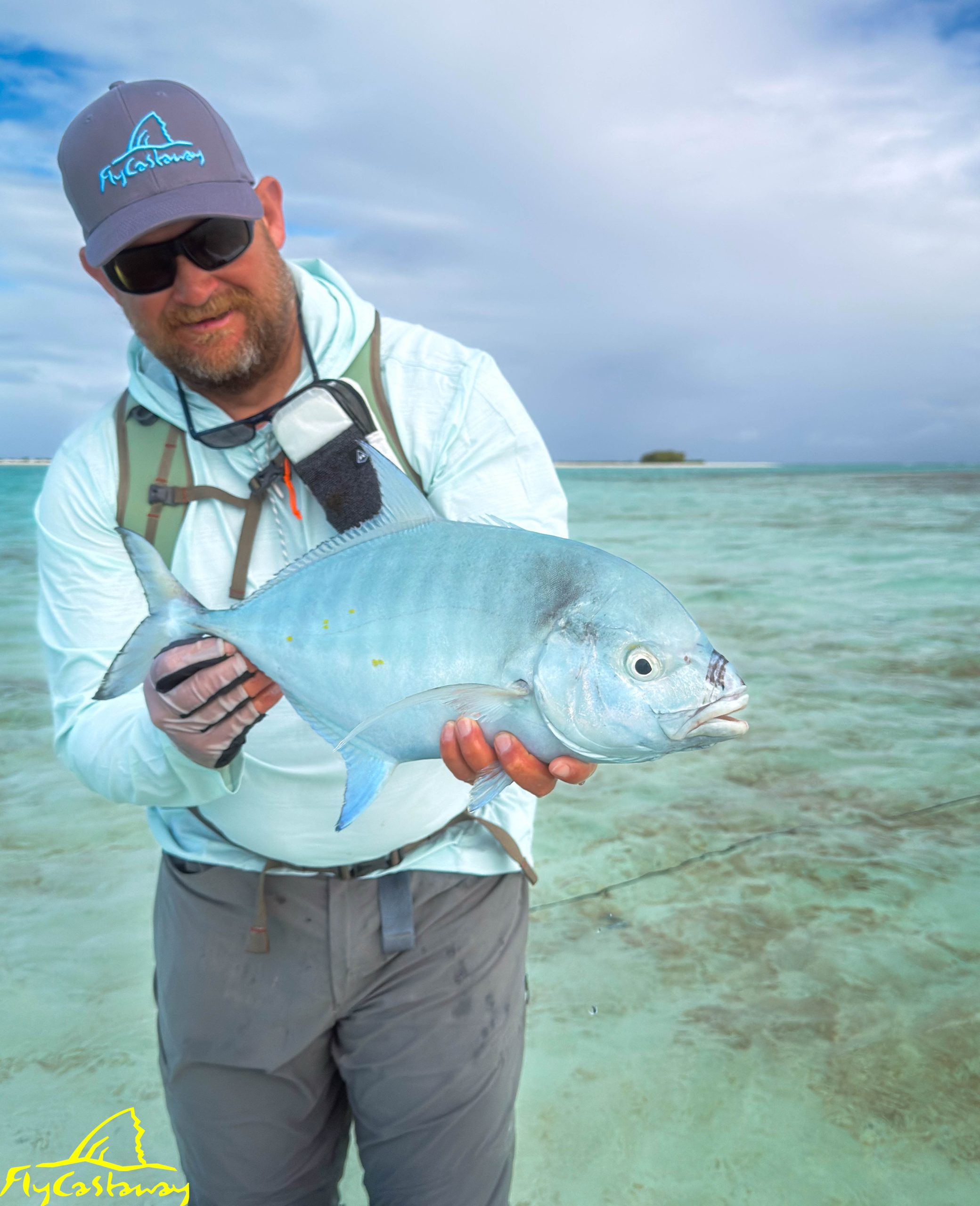
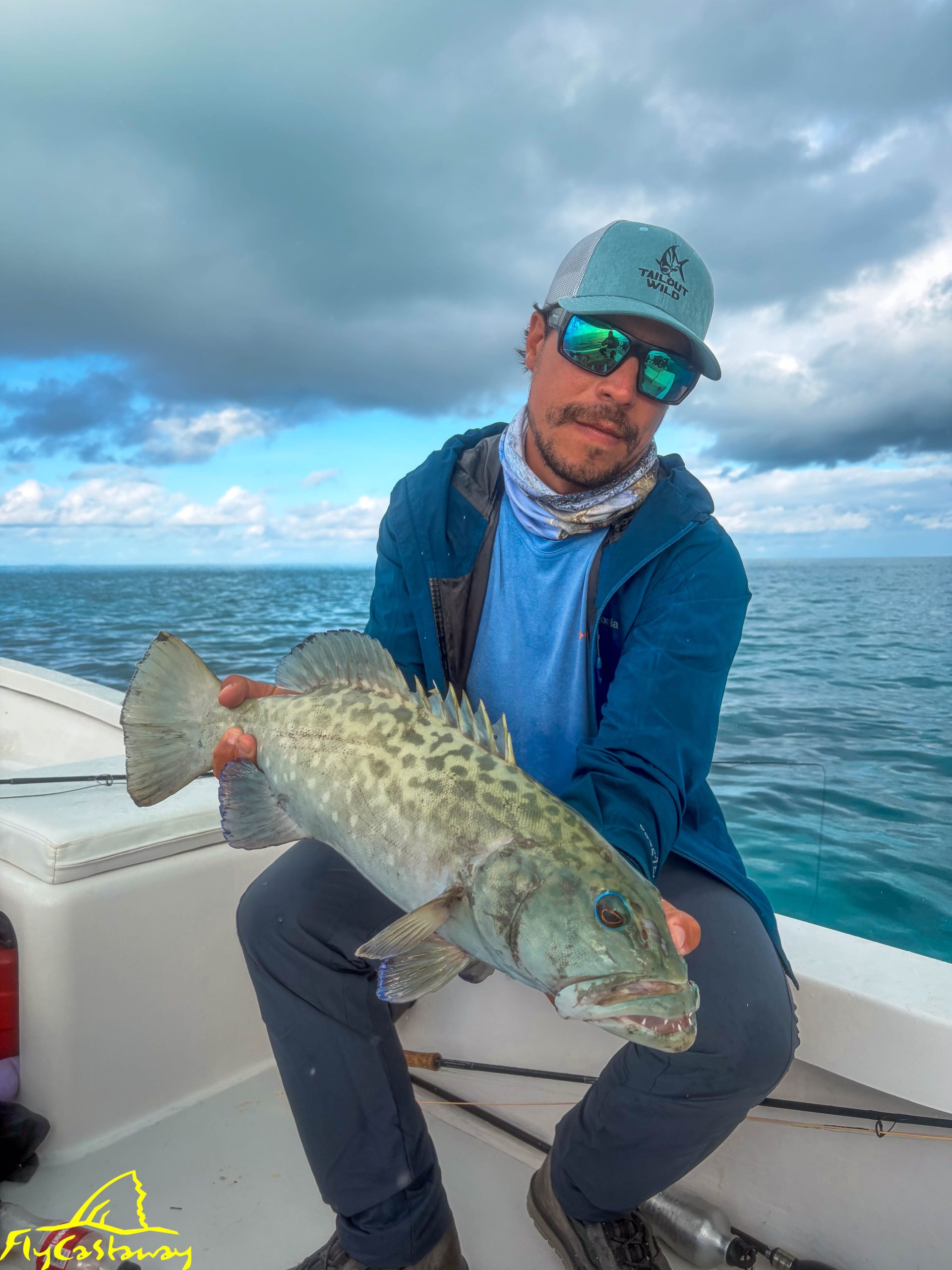
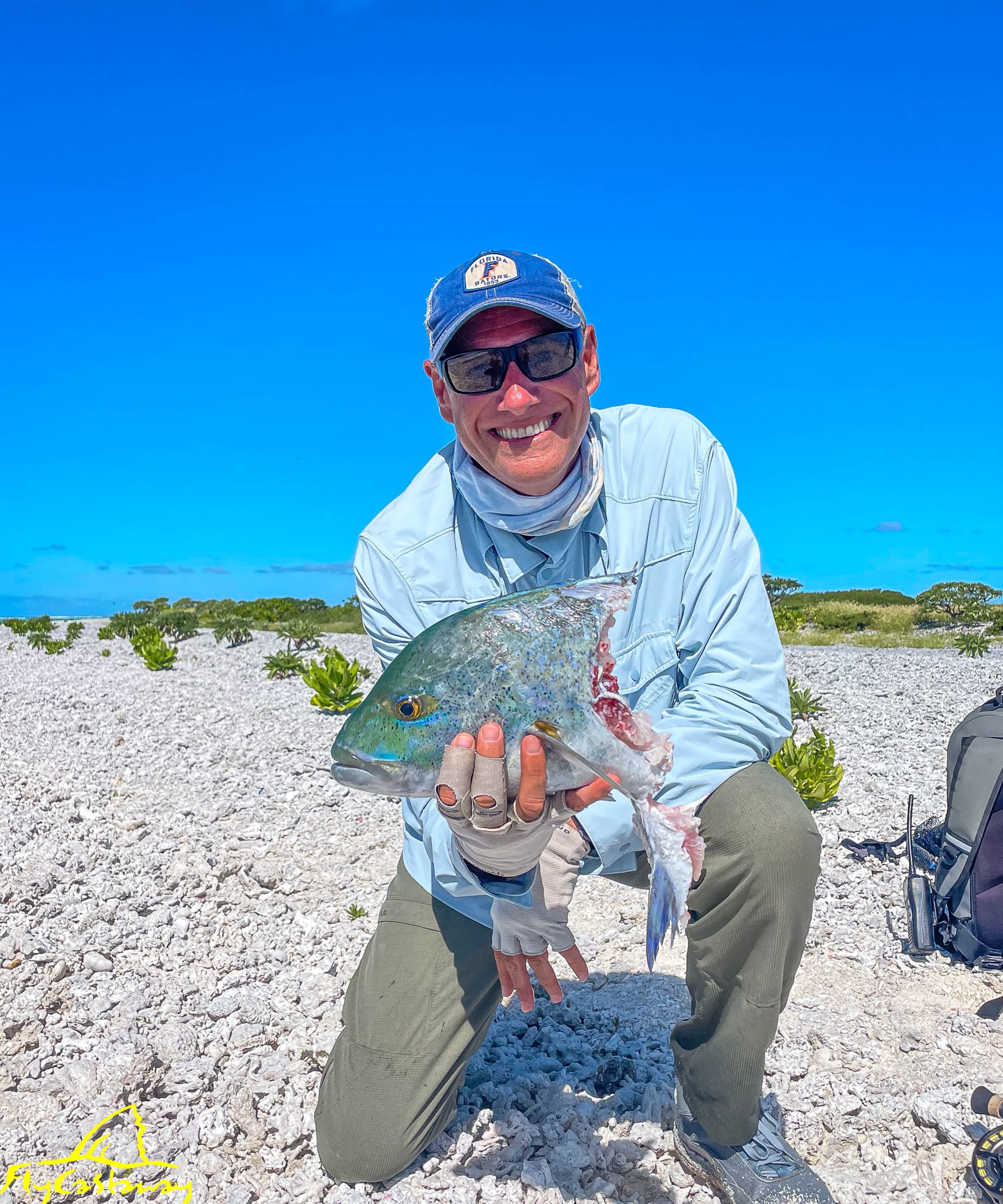
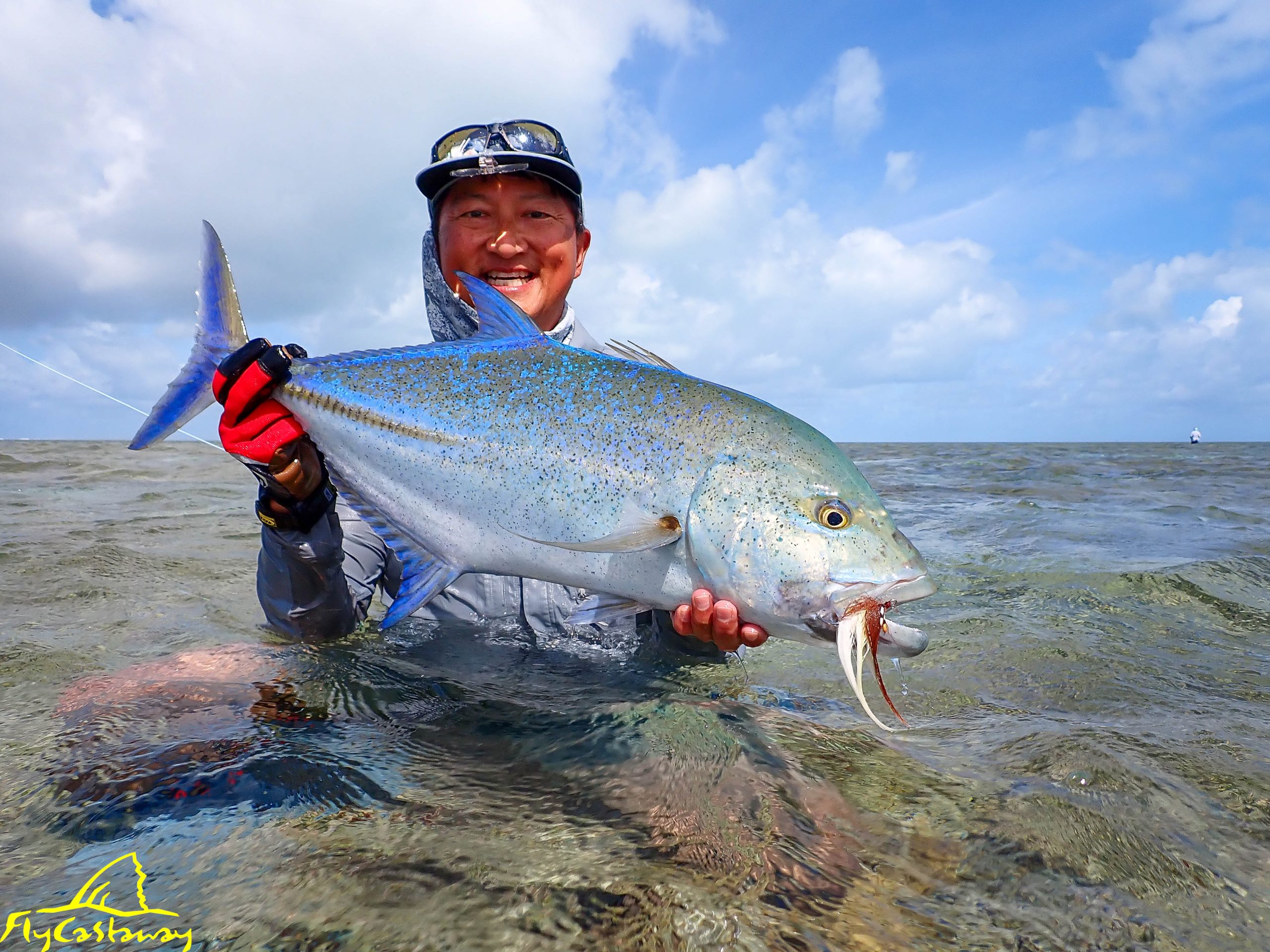
It was a magnificent fish: deep-bodied, powerful and carrying that extraordinary blue sheen we’d begun noticing on many of Nyerere’s tigers. After a few photographs, Tim lowered it back into the lake and we watched it disappear into the clear water.
Not long afterwards, shouting erupted from G and Paul’s boat below us. Paul had hooked a fish and three enormous tigerfish appeared behind it. Both men cast into the melee and suddenly both were attached to very big fish.
Tigerfish being tigerfish, neither encounter ended happily. G’s charged beneath the boat, forcing him to give line before the hook pulled, while Paul’s came loose as well. Disappointing, certainly, but neither lost fish dampened the mood much because by now we had come here looking for evidence and were seeing it everywhere: clear water, huge concentrations of bait, shoals of quality tigerfish, fish cruising in the shallows, packs hunting around drowned timber and, increasingly, signs of some genuinely big fish amongst them.
One Last Session
 Our final day disappeared in a blur. The morning itself has largely merged with the previous five days in my memory, but the final afternoon hasn’t.
After lunch, Paul and I returned to the area we’d explored the day before while G and Tim headed in the opposite direction to return one of the boats. The weather was unsettled at first and we scratched out a few fish, but late in the afternoon the breeze faded and the light softened. Baitfish began dimpling the surface in several places, while large tigerfish and vundu started rolling amongst them. There was a feeling that something was about to happen.
We tied the boat to a large stump near where we’d seen the activity and on the first cast both of us came tight.
The next half-hour is difficult to describe accurately. There were fish on and off, savage hits, missed eats, jumping tigers, plenty of jeering and even more laughing. Packs of fish appeared beneath the boat and, at one point, I watched a group of tigerfish all around ten pounds or better charge from beneath a floating carpet of debris and attack my fly.
Eventually, and far too quickly, the light began to disappear. We still had a long run back to camp and there came that inevitable moment when we knew we had to make the final cast.
Usually at the end of a good fishing trip you can console yourself with the thought that you’ve begun to understand the place, perhaps even seen much of what it has to offer. This felt completely different. After six days, it seemed we’d barely scratched the surface.
We packed the rods away, started the engine and pointed the boat towards camp.
Just the Beginning
 Early the following morning we said goodbye to Roly, Ali, Godi and the rest of the team who had somehow kept us comfortable and fed in such a remote place, and began the long journey home.
I’ve been fortunate during my life to explore and fish some genuinely remarkable places. What becomes increasingly apparent as the years pass is just how rare it is to encounter somewhere that still feels truly unknown.
Lake Nyerere gave us that feeling again.
Part of it was undoubtedly the fishing. Over six days we’d gone from wondering where the tigerfish were to finding shoals of eight-to-twelve-pound fish, sight-fishing them in shallow water, watching packs attack hooked fish and witnessing feeding behaviour unlike anything I’d previously seen. We’d landed fish to up 16.5 pounds and seen considerably larger fish to leave us wondering what might eventually come from the lake.
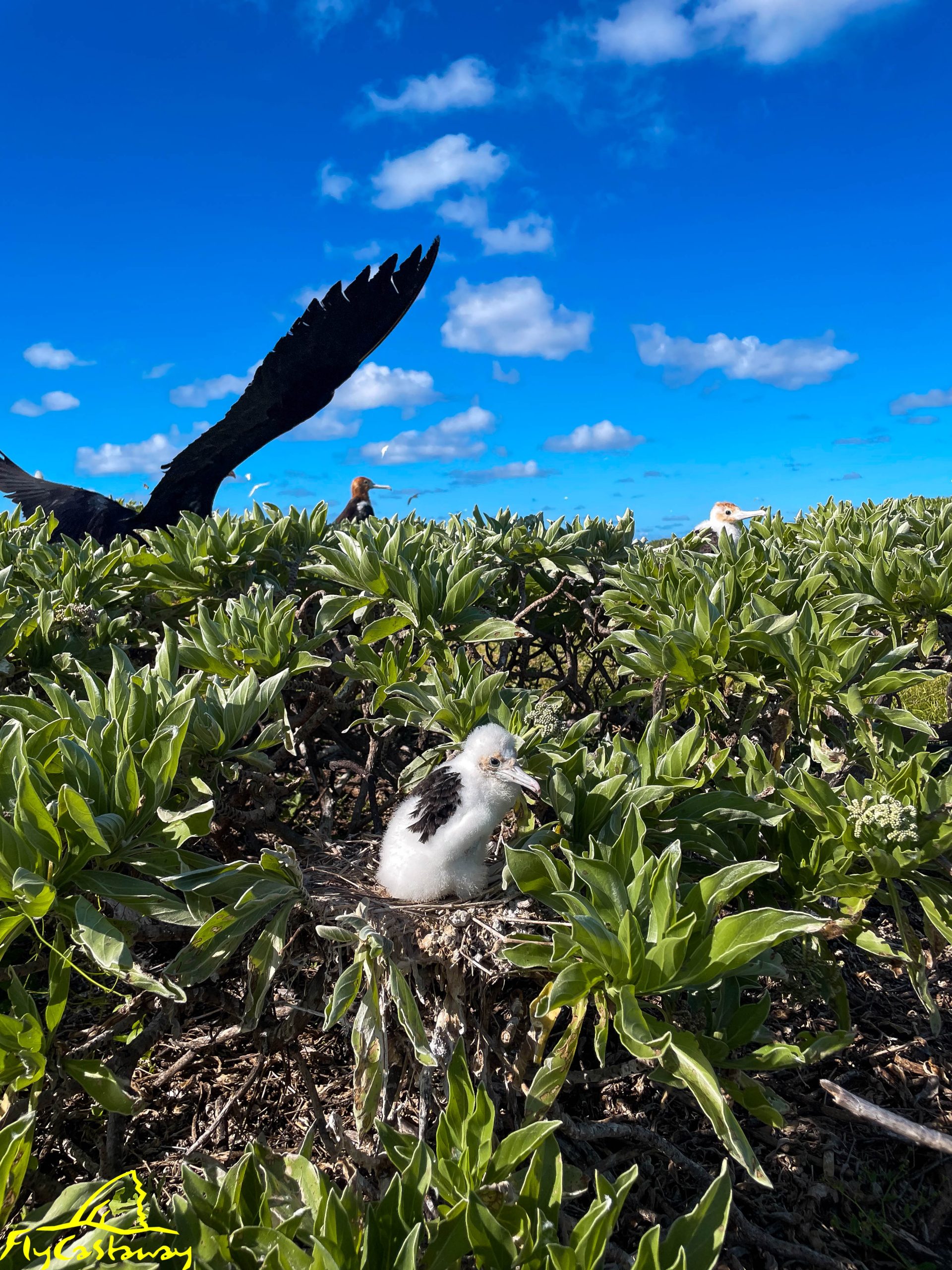
But the fishing was only part of it. There was the first view of the lake through the trees after a nine-hour journey from Morogoro; waking beneath canvas with a leopard somewhere outside; hippos grunting beside the boat; fish eagles calling from enormous dead trees; crocodiles appearing from dark creek mouths; and clear water flooding an ancient landscape before disappearing around corners we hadn’t yet explored. All of it combined to give the place a sense of wilderness that is increasingly difficult to find.
Perhaps most compelling of all was the feeling that we had arrived at the beginning of something rather than the end of it. We had explored only a fraction of an enormous lake. There were countless bays we hadn’t entered, shorelines we’d driven past, river arms we’d never reached and pieces of structure marked on satellite images that remained completely untouched.
What lives in those places remains to be discovered.
As I write this, construction of our ten-guest tented camp is underway on the wooded shoreline where we first arrived that July evening. In July 2027, our inaugural season will begin and the first guests will start exploring the lake with us. There is an enormous amount of work still to be done between now and then, but that is part of the excitement.
Twenty years in this business has taught us that truly special fisheries are rare. Rarer still is the opportunity to encounter one at the very beginning—to explore it, learn it and watch its story unfold.
For six days in July, Lake Nyerere allowed us a first glimpse.
Something tells me its blue tigers have a great deal more to show us.